Power of Ignore (Or Ignorance)

ig·nore  verb   —refuse to take notice of or acknowledge; disregard intentionally.

fail to consider (something significant)

If you’re like most people you probably deny you ignore problems. But it’s more common that we think.
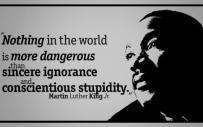
martin

In fact, ignoring a problem is a coping mechanism we’ve used since cave-man days.   Often it’s easier to ignore a problem instead of trying to solve a problem. If we deem there is no problem then there is no worry about solving a problem that we deem doesn’t even exist!

Personally, being ignorant (a variant of the verb ignore) is a survival mechanism. If facing our problem is not directly linked to survival we make it a lower (or no) priority. Once survival needs are met, it’s easy to ignore other problems. With this mantra, our life seems to become easier…. But this is a fallacy. Ignored problems never go away. What was a small issue becomes a great problem when it is ignored over time.

There are dozens of business examples failing when leaders ignore problems. When the business leaders fail to critically examine policies, process, the market, customers, and trends they ignore potentials problems.

Ignoring problems (or failing to try to proactively find and solve problems) is a failure of leadership.

During the 1990’s my friends were in the 1-hour photo business. Things were profitable for more than 10 years. Business was good. It was easier to ignore future problems. In their business world nothing was changing. Yes, there were some stirrings of electronic digital cameras in a distant horizon, but that technology was expensive. In 1995 a good digital camera cost between $5,000 – $6,000.  There was nothing to worry about. Customers always wanted the cheaper and more convenient 1-hour service. My friends ignored the issue… After all, they had a government contract for film development.  Ignorance was bliss—that is until digital cameras oversold film cameras in 2003. My friends went bankrupt.

Blockbuster video opened first in Dallas Texas in 1985. Nine years later Viacom bought Blockbuster for an unprecedented $8.4 billion. Blockbuster ignored Netflix as a competition. Blockbuster ignored the change in the video market from stores to subscription home delivery. Blockbuster executives literally laughed aloud at a 2002 offer to acquire Netflix. Blockbuster ignores kiosk rental service beginning in 2003 (Redbox). Blockbuster ignored the customer complaints of late fees for 14 years. In September 2010 Blockbuster went bankrupt. Ignoring the changing market and customer needs was expensive.

Circuit City was a 60 year old electronic and appliance behemoth and went belly up because the executive leaders ignored basic problems.

After 120 years in business Kodak Eastman went bankrupt in 2013 because it ignored its core business. Kodak insisted it was in the “film” industry and ignored “digital imaging” as the new paradigm.

This is not unique to business. Government and police organizations litter the landscape with examples of failure due to the power of ignore.

A victim reports a sex crime. The police officer waits a few days to ‘check in’ to the allegations. Ignored and avoided, the victim went to the local news outlet to get answers. The Chief of Police is then explaining the lack of timely response by the officer and trying to avoid a public embarrassment. The officer is censured for ignoring the call for service.

A senior executive received damning information about the organization. The boss gave the executive a mandate to investigate and find the validity of the information. The executive delayed 2 months to beginning an investigation. The message is: Ignore a message long enough and it may go away. Conversely the thinking is: This issue isn’t serious enough to put energy into it. They ignored the seriousness of the allegations.

An agency chief bemoaned aloud that there was no accountability for his executive staff.   He indicated there were no measurements to determine if the junior staffers were being effective. Eventually he decided there were no effective way to measure efficacy of staff work; so the problem went away. He ignored the real issue.

Months ago a senior executive administrator was asked a similar question: “What are the matrices or benchmarks associated with [a key position in the organization]? After the executive stopped laughing (yes, he literally laughed out loud), he said:

“There is no way to measure effectiveness in [that position]. There are no benchmarks or matrices.”

Essentially he said no problem exists, so we can ignore a problem we haven’t specified.

What are the differences between these responses?  In substance, the officer, the senior executive, and the chief was ignoring or denying that problems exists. This is a leadership fail.

The reason business and government leaders ignore problems is because they fear change. Period. Dr. Robert Kriegel (Sacred Cows Make the Best Burgers) wrote that in 1996.   News flash: 20 years later— NOTHING HAS CHANGED.

In 2016 John Kotter (author of That’s Not How We Do it Here)  postulates organizations need disruption and stability to thrive.   Management is about stability.  Leadership is about disruption.  There is no place to ignore issues.   Leaders disrupt. Leaders need courage.

Organizationally blissful ignorance is sometimes the modus operandi. For managers and supervisors it’s easier to ignore problems rather than try to effect solutions. Maintaining the status quo is safer than working to solve an issue. The mantra seems to be

If it ain’t broke, don’t fix it

Dr. Kriegel says new mantra should be

“If it ain’t broke; Break it”

Kriegel says we must face our fears and embrace whatever change we experience.  There is no dodging the rapid change of society.  Things change more quickly than it used to and the pressures can be intense.

The opposite of ignorance is not knowledge.  The opposite of ignorance is courage.  The solution to ignorance is to develop courage.  We dispel ignorance by courageously asking questions and seeking answers.  If we, as leaders, experience courage then our knowledge grows and our ignorance doesn’t have so much power.

We must have courage :

  • To look at the unknown
  • To ask questions that are uncomfortable
  • To challenge the status quo
  • To act when action is needed
  • To be politically incorrect
  • To “get it wrong”
  • To see past the platitudes and seek causal issues
  •  To feel discomfort and move past it

Yes, there is a power to ignore…. But ignorance not a positive power.

Of course, your mileage may vary…

Dr. Jay



Don’t be That Guy

stroke2

I work in a field where we’re known to “eat our young”.  I know that is not a flattering statement to say about a profession, but it’s truer than we want to admit. As a police officer you either figure it out or find yourself looking for a new job.  We smugly say “Yep, being a police officer is not for everybody” and give out walking papers like they were business cards.

Part of me is very happy there are high standards for police professionals.  With all the national scrutiny and the national dialogue not friendly with law enforcement, it does take a certain type of person to do this job. I used to be this type of guy.  Post stroke I’m having to find my way back to  who I used to be.  I feel I’ve been evicted of my identity.

For example, writing used to be therapeutic for me.   Now it’s a chore.  Simple police reports require more re-edit that I am used to doing.  Goofy.

I hope my grammar and syntax fluidity will come back too.  I’m having a challenge with homophones and spelling.  I know the different between there, their, they’re and by, buy, bye; but my writing hasn’t displayed my knowing!

My friends tell me my speech is getting better…. by the week…. I saw a friend, whom I’ve known over 20 years, and commented he could not even really hear my verbal gaffes…. barely.  He is kind.  Improvement is good.

I’ve found a problem with me using gender and pronouns.  I’ve caught myself referring to ‘she’ when I’m talking about a ‘he’ … And vice-versa.  My spelling  is showing some inadequacies too.  I could not, for the life of me, spell ‘mannequin’.  I couldn’t even get my auto-correct to find the word for me…. I was able to find the spelling by my on-line thesaurus…. This week I forgot how to pronounce “opinion”… Which is odd, since I have some many of them…. Kinda funny for me, actually.

My doc tells me there isn’t much treatment (except time) and continue my therapies.  I feel like I have to continually explain myself.   We have protocol for physical maladies, but nothing for unseen neurological damage.  There is no cast to remove or there is no bruise to heal or there are no stitches to remove.  The healing is invisible.  This is a hard concept for “that guy”.

I will get my language and grammar and speaking capacities back.  The problem is I don’t know when.  The speech pathologist seemed to think of months… not years.  That was encouraging.  Yet, I have not been kind to myself.  I have been “that guy” to myself.  You know, the one who says “Just suck it up”.

The day I was hospitalized my language was about 30%.  It was apparent to anybody communicating with me.  A month later I was 75% (maybe).  Two and a half months later I’m 80% back.  These percentages are just my estimates.  The docs won’t give me percentages.

I have a stammer and stutter that I never had.  My speech issue exacerbate by stress– And this is a stress job.  (My internal “that guy” dialogue is beating me up for whining too much as I write this.)  Damn the humanity it all….

I still maintain I am blessed.  And I am humbled by this experience.  AFGO (Another freaking grow opportunity)….

Of course, Your mileage may vary

Dr Jay


My Newest Bias


I was listening to a segment on public radio as I was driving to get dinner yesterday and heard an interesting bit on “white privilege“.   A white rapper sung and wrote about supporting a black protest. In his solidarity with non-whites, he questions his own credibility as a white supporter with his white privilege.  (Read more)

I’ve been familiar with the term “white privilege” since the 1980’s.  The term has actually been around since about 1935, but race or privilege wasn’t discussed in my family growing up.  The only societal label that stuck to me was “poor white trash“…. And it was used to describe my family.

“Poor white trash” is a euphemism for lower social status white people usually in the rural south.  Other equally derided terms may be “redneck”, “Okie”, “hillbilly”, or “cracker”.  White trash, as a slur, has been around since about 1835.  Harriet Beecher Stowe even included a chapter about white trash in A Key to Uncle Toms Cabin.

I don’t pretend to know what it’s like to be black or brown in America.  I can only be grateful that I didn’t turn out to be what my dads expected from me …. “You’ll wind up dead or in prison” He frequently predicted prison before I was 30.

My dad was a violent man.  He was a World War II veteran and had scars on his arms from shrapnel wounds.  He never spoke of his experience. I found out he was an Army infantryman in Europe for 4 years, during the thick of war.

He’d grown up in the Appalachian foothills of North Carolina where he had a hardscrabble life.  His mother was a “working girl” and his dad was a “john”.  She lived in the city and tried to raise him for a while.  At about age 8 my dad was sent back to the hills where he was used as labor for familial friends.   There was no schooling for hillbillies in that area then. Completing the third grade was a triumph compared to some of his contemporaries.

He learned to fend for himself. He fought off sexual attacks, sometimes winning and sometimes losing.  He fought for food. He fought for a place to sleep.  His world was truly survival of the fittest. Some of the things he never outgrew…. As a kid, I remember him placing his wallet in his pillowcase while he slept.  Old habits die hard, I guess.

He suffered in that hellhole from 1927 until about 1937.  The Great Depression was in full swing.  He stole his uncle’s truck and left when he was 17.  Times were tough for everybody…. Particularly an uneducated, unsophisticated teenager with no skills and no prospects.

He lied about his age and joined the National Guard in 1938 to avoid being drafted into the war.  In 1939 his unit was activated and he served on active duty until 1946.  He made Corporal and Sergeant three times.  Of course he got busted three times.

After the war he worked several laborer jobs.  In the mid 1950’s he became a commercial baker.  He moved to Winston-Salem, North Carolina and tried to re-connect with his mother.  She’d settled into her life and was working at the RJ Reynolds Tobacco Company.  She was acquainted with my mother’s dad who worked at the same place.

My mom was just returning from Texas (with a two year old child) and no husband.  She was 19.  Her dad told her she needed to get some stability and knew a guy who she may be interested in.  They married when she was 21 and he was 40.   And I was the progeny of that union.

Life was not idyllic.  My dad wasn’t the stability he was purported to be.  He was violent, moody, and changed jobs often.  Usually his job changes came because of physical confrontations with management.  He worked as a laborer in textile manufacturing, a box factory, a jelly production plant, a fiberglass manufacturer, and a janitor in food service.

He was not a man to be trifled with.  He meant exactly what he said.  If he said “Stop it” he meant “Stop it”.  He didn’t say it twice.  He didn’t give idle threats.  Whatever he demanded, he could back up.  I saw it frequently.

When he told me “I’ll put you in the ground and make another one that looks just like you” I believed he meant it.  I saw him shoot our family dog, who loved my dad more than anybody else.  Dad showed zero remorse…. Just “boom, boom” of the shotgun and “yelp”.  Lucky was dead.

From about age 11 until I was 15 I took a beating from him about every other week.  I don’t mean a spanking or a paddling.  I mean a beating.  Fists, belts, sticks… whatever could inflict damage.

When he said I was “white trash” I believed it.  The “poor” was never in question.  I got my first job at age 12 to pitch in (and have been employed since).  I was earning huge at 65 cents an hour.  There weren’t many extras in our household.  I never remember our family never ate at a restaurant together until I was in high school.  My sister tells me we did.

There is a moral toll that comes with being labeled as a small child.  That early self-image is hard to shake.  I don’t know where my desire to prove him wrong came from. But I was determined to show my dad that I was more than “poor white trash”.

I was 18 when he dropped me off at college (I earned a full-ride scholarship for academics). It was the first time he ever said “I love you” to me. In fact, that’s the only time I ever remember him telling me that.

Eight years later I flew him out to Texas to see me commissioned as an Air Force Lieutenant.  He never told me he was proud of me.  I found out later he told anybody who would listen about his “military officer son”.

All this brings me here:

This week, in a leadership class (developed and delivered by my department), we had a discussion about bias.  I know I have them, but I didn’t realize this one until I heard the NPR report.

My newest bias is a distaste for you if you assume you know me because of my skin color.  I can’t reject “white privilege” because I know as a society it exists. But when I heard the radio commentary about “white privilege” I cringed.

While I may have enjoyed “white privilege”, I certainly have never felt it.  If anything, I still work against feeling like “poor white trash”.

Of course, your mileage may vary.

Dr Jay

Live Like You Were Dying Pt 1

This is an excerpt from my book “How to Live Like You Were Dying: Notes from a Cancer Survivor”        Originally written in 2005.

llywdying

Chapter One

 
“O death, be not proud” from Sonnet X, Jon Donne

 
For most of us, the good news about dying is that we don’t know when it’s going to happen. We don’t know when we are going to die. And for most of us we don’t use the term “good news” and dying in the same sentence, but I’m getting off point.

For most people when the idea of passing away comes up, ignorance is bliss. Psychologists call it denial. To me, it was just the way I lived. For me it was normal.

I never thought much about dying. I certainly didn’t worry about it. I certainly never considered writing about dying. Happily, this isn’t about dying. It’s about how to live. It’s about how I learned to live based on circumstances in my life. It’s how you and I might live better if we have an awareness of our mortality.

On the rare occasion I thought about the possibility of dying I didn’t think it would be my turn soon. I often joked that I wasn’t afraid of death… I just didn’t want to be on the next bus load. I laughed when other people joked about dying; the old joke that they didn’t mind death, it was the dying that was a nuisance. In short, I didn’t make much space in my thinking for mortality, death, or dying.

But who does? Certainly none of the people I knew or associated with did. We were macho. We were immortal, or so we thought.

I only casually thought about death when I brushed past it in my life. A long-time loyal bar customer had an unexpected heart attack and I said a few words at the eulogy. A cherished employee passed from AIDS related disease and I told him “Thanks & Goodbye” in the hospice. A student friend had gotten killed in an automobile accident and it was a shock.

My best friend from grade school was killed in a motorcycle wreck, but with his reckless life, I kind of expected it. Even my father had passed away years before from heart disease near age 69. But I was unfazed; he was in poor health and had heart disease.

I never considered my mortality. As I moved from my 20’s to 30’s and into my 40’s I felt my body change. I got tired easier, I got heavier. I got “soft”. Some would say my body was deteriorating and there’s a medical argument for that, but I never considered the possibility that I could be dying. I never considered that I could be dying soon.

It was a big shock when my oncologist diverted her eyes from mine on our first office visit and told me at best, I had six months to live.

SIX MONTHS? That’s only 180 days. How could she give me this “death sentence” with such certainty? How could she not look me in the eyes when she said this? What was so important on that paper that she had to look at it when she delivered this shocker to me?

I was shocked. I was in disbelief. The doctor had to have made a mistake. I didn’t feel like I was dying.

After all what kind of credibility could she have? She had a bad hair color and dandruff! Her hair was a little greasy and unkempt. There were dandruff flakes on her shoulders. Her roots didn’t match.

Here was a medical doctor, an oncologist, a trained professional giving me devastating news and I was focusing on her personal grooming habits and lack of style! It’s amazing what tricks the mind can play when one gets such shocking news. I was getting the worst possible news in my life and I was criticizing my grim reaper’s lack of élan.

I was judging her for letting her roots show, so that I barely heard the “death sentence”.

Of course your mileage may vary.

Dr Jay

Free Your Mind

GeorgeCarlin

I’ve really enjoyed George Carlin.

I just finished reading his self-described “sortabiography” (Last Words).  George started writing it years ago and his agent/manager finished it for him after his death.

Just like in his comedy show, George doesn’t pull punches.  He writes about his pain and path.

George was a daily pot smoker (no surprise there), a heavy cocaine user, and a functioning alcoholic.  What really disappointed me was Carlin credits his success to his use of LSD. He relates that LSD opened his mind to be more creative and lose the “bullshit” of his upbringing.

Carlin was raised to be hyper-Catholic in a dysfunctional family with an abusive alcoholic father and a manipulative-overbearing mother.  Mom eventually left pops and then poverty became an issue.  George, for the most part, was left to raise himself.  Unfortunately this is not an uncommon tale.

George left home to join the US Air Force at 17.  His plan was to become a radio personality, a comic, get famous, make movies, and then ‘have it made’.  What George didn’t know is that leaving home is only a geographic solution.  While you can move 1,000’s of miles away from home, your ideas of home/family still move with you.  Psych docs call it ‘family of origin issues’.

Trouble followed George and, as can be expected, the military was not a good fit for someone railing against authority.  His Air Force career was cut short and he started his broadcasting career.

George masked his pain and issues by self-medicating.  There was the liquor and pot.  And in the later 60’s he found hallucinogens.

I identified with George up to that point.  I had serious ‘family of origin’ issues.  My mom was a hyper-religious, manipulative over-bearing sort.  My dad was emotionally absent and was not a good man.  We were way below poverty standards.  I escaped to the military.  I left the Air Force prematurely. But I didn’t choose hallucinogens to “free” myself.

I’ve never used LSD or peyote or mescaline.  I’ve never licked a frog to get high.  I’ve never tried cocaine or heroin.  I’ve never even smoked pot (gasp). I don’t understand ‘huffers’.  I drink very little alcohol now.   I did drink too much in my 20’s and 30’s.  But experimenting with drugs is completely foreign to me.

Yet I did find ways to have the success I wanted without drugs.  And I’m still working to achieve additional goals– chemical free.

I have studied the human mind. I have studied how to and have experienced an alternate consciousness via meditation/hypnosis/yoga.  I don’t know if it’s like an LSD high, but it’s close enough for me. My first out of body experience came in 1987 flying back to the US from Spain in the webbing flight seats of a C-141.  There was just enough engine noise and I was just woozy enough to experience this altered state.  It was eye-opening.

I’ve been able to re-create the out of body experience several times and never with drugs.  It’s like any exercise… the more you practice… the better you get.

ALANCohen
Alan Cohen

Years ago I went to a class Alan Cohen taught.  Alan’s course was how to live truer to one’s values…. How to be more authentic….  I’d read and enjoyed Alan’s books…. I liked the way he wrote.  Alan inspired me.  I asked him what the secret to his mind-expansion was… he said “LSD”.  Another potential ‘hero’ down in flames….

But maybe that’s why I’m a good cop. I’m very ‘straight’.   I don’t relish the idea of self-medicating and I don’t wanna ‘get bombed outta my gourd’.  Maybe I’m a self-control freak?

I’ve realized I can learn from anybody.  Even from those I don’t care to emulate.  And I’ve learned I can be happy and create emotional freedom without medication…. perhaps that makes me the lucky one?

Of course, your mileage may vary.

Dr Jay

No Quick Fixes

KidTVNO

I knew American society was in trouble13 years ago when Dan Rather had an “in-depth” report on drugs in schools that lasted about 2 minutes.  I can’t write a synopsis to this article in 2 minutes, yet here is a major news icon probing an epic issue with a TV presence about the length of a couple of car commercials and calling it “in-depth”.  Yeah, right.

I think our fascination with believing complex problems can be solved or explained quickly goes back decades.

Our problem began in the 1950’s with the proliferation of television.  GI’s came back from World War II and began living the American dream.  They created suburbs, tract housing, the baby-boom, and bought TVs.  Boomers (as we are called) were born from 1946 -1964.  Being children of “the greatest generation” was lost on us for most of our lives.  We knew things our parents couldn’t have imagined (we thought).  We grew up as TV watchers and TV taught us everything we needed to know (we thought).

TV was more influential that society imagined. In the 1950’s most television programming was a spin-off of vaudeville.  Vaudeville was the primary entertainment media before radios and moving pictures.

The 1950’s TV reflected vaudeville values.  TV shows were a way to generate revenue from commercials through wholesome entertainment. Based on success of some shows (I Love Lucy, The Honeymooners)  TV writers created one hour format dramas and half hour format comedies.  The situation comedy was born.  Television was changed forever.

Sitcoms are designed to fit into a half hour time slot with 22 minutes of programming and 8 minutes of commercials.  The plots are usually thin with familiar characters in a familiar setting.  A show usually starts with a misunderstanding or problem (often cloaked in humorous or sarcastic dialogue), a comic interpretation of the problem, and the resolution of the misunderstanding or problem.  All within 30 minutes.

TV drama series weren’t different.  Bonanza, Little House on the Prairie, Kojak, Star Trek, Baretta, Streets of San Francisco… etc… All had a similar formula: problem,  plot complication, conflict, and resolution.

The tropes, wardrobes, lingo, and attitudes may have been different, but what didn’t change is the resolution of the problem in 30 – 60 minutes.  This subtle suggestion that complex human problems can be solved in 60 minutes crept into the subconscious mindset of most baby-boomers who were subjected to thousands and thousands of hours of this misinformation.

Resolving complex human issues in 30-60 minutes is an illusion.   So is television, but a child absorbing this information does not know what is real and what is illusory.  There’s the problem.  As we know intellectually, are very few quick-fixes for people problems.  We now have a generation of parents/grandparents/teachers/leaders who don’t recognize this. They want results NOW!  They want an “in-depth” analysis in 2 minutes.  They want a “quick fix”. And most of us have no idea where the internal sense of “I want it now” comes from.

As a generation we created faster everything: cars, bikes, clothing (wash & wear), Velcro, home appliances, microwaves.  We built speedier technology:  transistors over tubes,  calculators vs slide rules, the internet, facsimile machines,  mobile phones, computers, going to the moon, and more.  What we can’t do is solve complex societal issues or interpersonal problems through short cuts and technology.  Why?  Because you can’t fool mother nature.

Example: There is no short-cut to parenting.  Kids still go through developmental stages as they have for centuries. Technology can’t replace parental responsibility or human development.  TV isn’t a baby-sitter.

Example:  There is no short-cut to a good marriage.  Partners have to work together through issues.  Hurt feelings are not always cured in 30 minutes or less.  Technology can’t fix a failing marriage.

Example:  Farmers know you can’t fool mother nature.  If a farmer fails to prepare and plant the field there are no “hacks” to make crops grow.  There is a growing season and nature takes the time it takes.  If you harvest too soon the results are not good.  If you delay harvest the results are not good.  A farmer has to work at the speed of nature.  Period.

In contrast with nature, society moves faster as media speed increases.  Organic solutions do not get faster.  We can’t fix people problems in 30 minutes or less.  We’ve got to think like the  farmer… We have to work at the speed of nature.

There is no 2 minute “in depth” analysis.  There are highlights, talking points, main ideas… yes… But solutions go much deeper.  We need to forget about the quick fix when it comes to people problems.  In my job this is not a popular stance.  As a system we have to work on lasting solutions.

I’ve got some ideas to help move us through this problem…. What are yours?

  • Stop settling for the quick fix
  • Observe and understand nature
  • Become more mindful of what’s happening NOW
  • Think like a visionary… think long term… act that way
  • Stop, listen, learn, teach
  • Be patient with change
  • Remember humans are not technology

Of course, your mileage may vary.

Dr Jay

Lessons I’ve Learned From My Dogs

I’ve been a dog guy all my adult life.  I don’t trust people who don’t like dogs… And I trust dogs when they don’t like people…

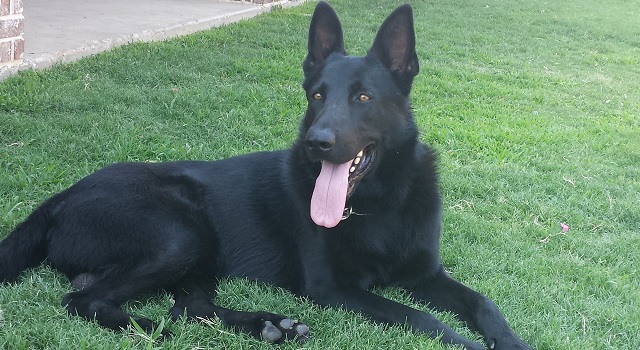
Meeka is my black six year old German Shepherd.   When I first saw her, her teats were distended and I found that at 2 years old she’d whelped 3 litters.  It broke my heart.  I asked the two Mexican guys that owned her how much they wanted for her. I bought her on the spot.  I took her to the dog wash on the way home and discovered she’d never been washed or petted.  I had her spayed 3 days later…. That was the best day of her life.  Now four years later, Meeka is all about family and her pack.  She’s happy to be in a family that cares for her.  She’s not interested in being the #1 dog.  She’s just content to “be”. She’s lost 2 dog companions, but she made it through the grief and loves life.

black.german.shepherd.2

Here’s my Meeka Learning Lesson:  Not everybody has a loving family.  Appreciate the family you have. Learn to just “Be”.

Harley is my wife’s dog.  He’s a 14 year old Chow/Shepherd mix.  Harley is blind and old.  He’s the Dog-Father.  Harley likes to growl at what he can’t see (which is almost everything) and barks when any visitor comes to the house. Harley’s bark is definitely worse than his bite.  Underneath his gruff exterior, Harley is a real softy.  He will growl and bark, but he is a real “love bunny”.   He loves to be loved…. But he is real protective.  My wife tells me I’m the only man Harley didn’t growl at when we first met.  I feel special.

Harley
Harley

Harley teaches me this:  It’s OK to be protective and gruff…. But remember to Accept Love..

SWAT Team was a pit bull that lived to be 7 years old.  That’s young.  He was euthanized three summers ago due to a degenerative disease.  SWAT was 70 pounds of pure muscle.  I got him as a rescue dog with “fight cropped” ears and he looked menacing.  But, SWAT loved kids and pooped ice cream.  He didn’t have a mean bone in his body.  SWAT, however was addicted to the “red dot”.  He would chase it until he dropped.  I’d run the “dot” under a chair and he’d wait hours for it to come out.  SWAT was always in a great mood and was a 100% optimist.  He chased the red dot for years and never caught it…. Yet I could say “red dot” and he would start looking for it and get energized.  He was always optimistic that he could catch it.

SWAT the night before he passed away.

SWAT’s taught me that I should always enjoy life.  He taught me it doesn’t matter if you win or lose… Play the Game and Be Optimistic.

Zoe is my step-daughter’s shih-tzu/yorkie mix.  Zoe is 7 years old going on 7 months.  She is very youthful and puppy-ish. She tolerates the “big” dogs, but knows she rules the roost.  She consistently steals Harley’s treats and chewys.  Harley takes it all in stride.  Zoe weighs about 5-6 pounds, but thinks she’s as big as 70 pound Meeka and 60 pound Harley.  She’s an instigator and manipulator.  She goes for what she wants and doesn’t let her size be a limitation.

Zoe
Zoe

Zoe’s lesson for me is don’t let others put limits on you because of what they see.  Be your true selfBe bigger/more/better than what others see on the surface. Don’t live under their limitations.

Hunter was a black and tan traditional German Shepherd I got because he was too aggressive for the owner.  Hunter never even snarled at me.  The family I rescued him from was amazed at the immediate bond we had.  Hunter was a protector.  I’ve had more than a dozen Shepherds over the years and he was clearly the most over-aggressive domestic dog I’ve seen.  Not to me or the family… But to anybody else he was a real “land shark”.  I hired a dog trainer. I consulted a behaviorist. I talked to my K9 handlers from work.  Nothing seemed to work to calm Hunter down.

After 4 months I noticed Hunter was not pooping right.  We went to the vet.  As it turns out Hunter had a disease and he could not process protein. He was literally starving.  He could eat and the protein would not absorb.  He was dying.  The vet seemed to think that this disease may have had something to do with his aggression. A hungry dog can be a mean dog.

There is no cure for his disease.  Hunter had to be euthanized.  I cried like a baby.  I’m welling up in tears as I write now and it’s been almost 2 years.

shepherd

What I learned from Hunter goes deeper.  Even love can’t cure some things.  Sometimes when things are not fixable you must let them go.  It’s hard to admit, but sometimes death is a more kind option than life.  It would have been more cruel to keep him alive and watch him starve to death.  Know when to let go.

As I read this I realize it seems anthropomorphic…..I’m projecting human emotions to animals…. And maybe I am.  But maybe I’m just letting the universe teach me some lessons I need to know.  I just hope I can remember to be as smart as my dogs and:

  1. Appreciate my family
  2. Learn to “Be”
  3. Accept Love
  4. Play the Game
  5. Be Optimistic
  6. Be your True Self
  7. Be more than just what others see in you
  8. Love can’t cure all
  9. Know when to let go

And of course, Your mileage may vary.

Dr Jay

Who is Your Hero?

“A hero is no braver than an ordinary man, but he is brave five minutes longer.”

Ralph Waldo Emerson

As a culture we’ve confused celebrity with heroism. We’ve confused fame with nobility. I am saddened by this thinking.

Being considered a hero used to mean you had to have accomplished something that was significant or contributed to society.  You walked on the moon (Neil Armstrong) or led civil rights (Dr King) or averted a nuclear war (Cuban Missile Crisis, President Kennedy) or explored and developed new areas (Daniel Boone) or led an expedition (Lewis & Clark) or conquered the highest mountain (Edmund Hillary) or did something.

Today, most of the celebrity “heroes” are music moguls or athletic stars: They are entertainment figures. I believe music and sports have a place in culture and there are notables in both fields.  Some notables are iconic…. But not heroes. They are famous… But not heroes.  They have celebrity, but are not heroes.

I guess it all comes down to your definition of “hero” or “heroine”.   The generally recognized definitions of hero are: :

  • a mythological or legendary figure
  • one admired for great courage or noble qualities
  • an object of extreme admiration and devotion

The word “hero” comes from Greek “heros” meaning demi-god.  A demi-god is one who isn’t quite a god yet, but has more power than a mere mortal.  To be clear, I’m using the term “hero” which is the masculine form.  “Heroine” implies the same, but in feminine form.  “Heroine” was first used in c.1650.

Webster’s first definition seems to fit the form of demi-god.  Persons held in mythological stature (sometimes fables) from embellished stories passed through generations (Paul Bunyan, Johnny Appleseed, Robin Hood). Or “super-hero” fantasy characters (Superman, Bat-man, etc.)

For me, the second definition is the one that resonates.  Those people who demonstrate courage or bravery and maintain noble qualities (9/11 responders, combat veterans, those working to help less fortunate: nurses, firefighters, police officers).  These are the people that very seldom become famous but continue to do a difficult thankless job in spite of the lack of rewards.

A real hero is a mom who continues to “do the right thing” even when the no-good dad is nowhere to be found.  A real hero is the teacher’s aide who gives a hungry child a snack from her personal lunch stash.  A real hero is the anonymous citizen who shepherds a lost child until the child is safe.  A real hero is the Average Joe giving CPR until medics show up.  A real hero doesn’t have anything to do with popularity or celebrity.  Most heroes are the unsung ones.

I met a couple of real heroes yesterday.  I had the honor of helping at a fund-raiser for Special Olympics.  There I met a  married couple who happened to be corrections Captains. They have been volunteering for this charity for nearly two decades. Yesterday they spent a 12 hour unpaid Saturday helping make dreams come true for the less fortunate.  They are real heroes, yet there were no TV cameras or media blitz.  They did it because of their noble ideals.

The last definition of heroism is probably the most popular and disappointing (to me).  Idol-worship.  Fame based heroism.  I threw up a little in my mouth when I typed that.  Some celebrities rebel against this archetype– (“I am not a role model”- Charles Barkley).  However most celebrities revel in the hyperbole and believe the hero worship.

I don’t think I’ve ever understood our national fascination with celebrity.  I can’t identify the Kardashians out of a police line up. I think this has to do with my upbringing.  I grew up without television.  My mom was a religious nut and thought TV was evil.  She was serious about it.  My sister and I were not allowed to watch TV at friend’s houses and we were trained to turn away from televisions when we saw them on display in a department store.  Weird, huh?

There were some good side effects from growing up without TV.  I became a prolific reader.  I learned to listen and talk with anybody. I never idolized sports figures nor TV celebrities. The people I held in esteem as heroes were ones I met through our social circles (Lester Roloff, Fred Sink, Joe Hege) or ones I read about (Charles Lindbergh, Amelia Earhardt, Harry Truman, Apostle Paul, Lincoln, Gandhi, Da Vinci, Shakespeare, Newton, Helen Keller, and the list goes on).

But this isn’t about me.  This is about how we as leaders can effect positive change in our circles of influence. How can we create a shift away from idol worship to true heroism?  Here are some ideas:

  • Set the example. Know your own heroes.  Make your ‘walk’ congruent with your ‘talk’
  • Look for unsung heroes and acknowledge/reward them. What gets rewarded get repeated.
  • Teach values other than becoming famous or popular.  Realize social media “likes” or being popular aren’t good indicators of character or nobility.
  • Know good character is a developed trait. More practice makes better character.  Build yours and theirs.
  • Recognize every real-world hero is human and fallible– They make mistakes AND may still be heroic.  Just because you make mistakes doesn’t necessarily make your actions less heroic. (Think heroic effort)
  • Understand “anti-heroes” and learn why we like them (Bonnie & Clyde, Sopranos, Blackbeard)

Psychologically we need heroes. They give us inspiration and help us aspire to our “higher selves”. And we will find heroes… Consciously or not.  It’s better to make your heroes ones you choose, not ones the media or your boss or your social circle chooses for you.  You are in charge of your own narrative. You can live the life you’ve imagined!

Of course, your mileage may vary.

Dr Jay