Let it Be Easy

easybutton

I’ve been writing pithy vignettes with learning or growth insights for more than 10 years.  I have no idea if they’re valuable to anyone other than me.

The narcissist in me wants to believe it’s all about me, of course.  They ‘way-shower’ part of me thinks it’s about leading others.  The father in me thinks it’s about legacy.  The therapist part of me thinks it therapeutic.  The rigid disciplinarian thinks it’s about the regime and the discipline it takes.

My wife told me “That stuff sure comes easy to you”.   I bristled when she said that. I’ve never felt that way.  Ease wasn’t part of my vernacular when it came to writing.  The Puritan ethos I absorbed as a child placed more value on “hard work” and “working for what you earned”.  Easy was almost a dirty word.  I didn’t value what “comes easy”.

There are things that “come easy” to me.  I can stand in front of a crowded room and speak with almost no effort.  I can visualize building projects without blueprints.  I have a good ear for music and language.  I can easily distinguish Spanish from Portuguese (and I speak neither).  I can create conversation with almost anybody.  Cooking with no recipe is easy for me.  Still, I don’t value that which “comes easy”.

Ten years ago I went to an advanced hypnotherapist training (then located in Santa Fe, NM). I’d never studied existentialism in much detail.  There, at the Academy, I spent six months of 40 hour weeks immersed in new thought, yoga, meditation, humanistic existentialism, clinical practice, and “hypno-thinking”.  It was good for me.

I remembered a meditation/hypno session with one of my instructors.  The theme was “walking through open doors”.  The sub-theme was “let it be easy”.   The lesson was that doors open and we walk through them with little effort.  There are paths in the universe that are open to us and life doesn’t have to be a struggle.  We can reduce strife by going through the open door and allowing life to happen.  Stop worrying about “making it happen” and trust the path you’re on.

Intellectually I understand this thinking.  I know we have no control over that which is external to us and the only control we have in life is our response (or reaction).  My guts, however, do not agree.  My guts revert back to “narrow is the way that leadeth unto life, and few there be that find it” (Matt. 7:13).  As a child I learned that the “easy” path was wrong and the ‘good’ path was hard and strident and challenging.  There seemed to be little ease on the ‘good’ path.  Damn my guts.

Actually there is no discrepancy between the Bible phrase and existentialism.  There are actually few people who “let it be easy” and find the ‘good’ path.  Most people lead with their wounds and fears and scars and disappointments and strife and blah blah blah.  Being on the narrow path that leads to a fuller life is a choice… a choice to “let it be easy”.

Now I know these pithy writings are really lessons to me…. Hopefully you enjoy them too.

And my retort to my wife was “There is no writing… it’s all re-writing. And re-writing is easy”

Of course, your mileage may vary
Dr Jay

Growth is Optional

In my profession, time on the job is a most valued asset.  A 12 year officer is more valuable than a 6 year officer.

I’m not certain this value serves us as a profession very well.  It’s possible to have ten years experience and it’s possible to have one year experience repeated ten times…. Sometimes it’s hard to know which is which.

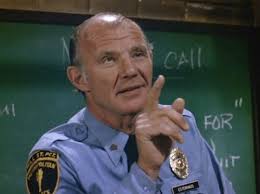
One of my team leaders would finish police briefing every day with this catch-phrase:  “Drive fast. Take chances”.  Most sergeants close briefing with “Be careful” “Stay safe”  etc, etc.  But ‘Blanco’ (as he is known) knows the difference between 10 years and 1 year repeated 10 times.

OldCop

Blanco was not supporting reckless or risky behavior.  Instead he was passionate about learning something new everyday.  He was about growth.  Blanco knows that if we don’t challenge ourselves we will not grow. He knew that while growth is optional, the options to growth are not good.

It’s like the apples on the trees in my back yard…. Either they are growing or they are rotting on the vine.  In nature, growth is NOT optional.  It’s either growth or slow death.

When I started working for Blanco, he asked me what my goals as a police officer were.  I told him I wanted to become part of the leadership team: I wanted to make Sergeant within 5 years.   ‘Blanco’s’ advice:  Do what makes you uncomfortable. Take risks.  Try new things.  In short he was telling me to not die on the tree… He told me to continue growing.

So my true goal is growth.  Learn something new everyday.

Of course your mileage may vary.

Dr Jay

How I Got Here From There…. Sorta

I’m a 55-year-old street cop.

Most guys my age in this job are seasoned police professionals planning for retirement or working senior positions as administrators in specialty functions.   Not me.  I entered the police academy at age 52.  My academy peers had an average age of 27.

I’ll admit to you that police work (particularly patrol) is physically a younger person’s job.  But perhaps youth is wasted on young people.  It’s interesting to show up on a call with peers 20 – 25 years younger than I am.  Yet these peers often have 10-15 years more civilian police experience than I do.  Invariably the citizens we respond to assist assume I’m the senior officer.  And usually I let them think that.

I’ll tell you, there is no substitute for experience.  And it doesn’t really matter if the experience is life experience or work-life experience.  Ya can’t train experience.

What I know and have experienced in my few years as a civilian police officer is that most of the time the “best” solution isn’t a “police” solution.  And that is disappointing for many of the younger people doing my job.  Most of the time police work is simply people work.  Old man’s work.  Boring. Not glamorous.  Not “Cops” from TV. Not CSI.  This is good news for me.

So the question I started to answer, before my ramble is: “How did I get here?”  Well, that answer depends on who you ask….

In 2002 (42 years old) my world started collapsing.  I was diagnosed with advanced stage Type II non-Hodgkin  Lymphoma and cancer in my lymph nodes.  My oncologist said I had about 6 months to live…. If I was lucky.

Until that time in life I’d been a through several “careers”.  I had been a law enforcement specialist in the Air Force (5 years enlisted/5 years officer). I’d owned and operated half a dozen successful restaurants and lounges.  I had a lucrative contract as an adjunct instructor at a university (teaching leadership, management, coaching, communications, and applied psychology).  I was a contract trainer for a professional training company.  I was a mini real-estate guru (I had several houses and one apartment building). I had a couple years of 7-figure income. I was a divorced father with a good daddy-daughter relationship.  I was “set”.

The cancer diagnosis rocked my world.  It changed my world view.  I’ll admit cancer is a cruel mistress. She took my ability to earn, my health, and my material possessions.  I wrote a book about it How to Live Like You Were Dying.

BC (before cancer) I was planning on becoming financially stable through the food and beverage business and real estate.  When I got sick I couldn’t do what I’d been doing.  I realized my mortality was real.  Eventually I went financially bankrupt.

AC (after cancer) I realized that my financial future was elsewhere.  I changed my life.  I used my education and opened a therapy practice.

When the real estate bubble started collapsing (in 2008) everybody’s finances changed.  I mistakenly thought I was employable at my education and age level.  I was wrong.

I had 11 years military leadership experience, 10 years supervision/management experience, 10 years teaching/training experience, and 15 years of creating, owning, and running my own business experience. I have an associate degree in Criminal Justice, a bachelor’s degree in Human Resources, a master’s degree in Organization and Management, and a doctorate (non-accredited) in Human Behavior Psychology.  But I was unemployable.

370 job applications gave me zero job offers.

I cut my resume by two-thirds.  I dropped mention of my advanced degrees.  I got a job offer selling cars.

Wanna know the hardest thing about selling cars?  Admitting to your friends that you sell cars.

Another side note:  There are a lot of corollary relationships between police work and car sales.  Both are people jobs. Both are problem solving jobs. Both are stressful. Both deal with people you’d sometime rather not deal with (in car sales it’s the management–in police work it’s the criminal element). Both are misunderstood by the public and probably neither deserve the stereo-types they have.  But I digress.

After 2 months of car sales I got an entry-level job interview from a large hospital system.  The hiring nurse asked me if I knew what a CNA (certified nursing assistant) did.  I explained that a CNA was a glorified “poop and pee patrol”.  I got the job.

After 3 years of glorified “poop and pee patrol” I had some decisions to make.  I was almost 50 years old.  What would I do when I grew up?

I did analysis of my skills, my experience, my education, my desires, and my goals. I realized I still had the law enforcement mind-set.  I still had the desire to serve the public as a police officer.  I still wanted to be a “good guy”. I want be be a cop.

I started to get myself into physical condition. I applied to every agency with an opening within driving distance.  I got several interviews.  Then I won the lottery.  I got a code enforcement officer job at my current agency.  A code enforcement officer is like “police lite”.  Code work equals: working out of the police department, driving a vehicle with a police emblem, wearing a bullet-proof vest, being dispatched on the police radio, and working on “liveability” issues (without a criminal nexus) with no gun, no arrest authority, and minimal training.

Fourteen months later the (then) Chief took a chance on a 51 year old code guy and promoted me to police officer.  Nineteen weeks of academy, sixteen weeks of field training, and eighteen months of probation later I emerge as “the old guy”.

Just before I entered the academy I chatted with a member of our department who was retiring.  We were both 52.  I asked him “Knowing what you know, would you do it all over again?”  He responded “Yep. Just not at your age.”

Of course, your mileage may vary.

Dr Jay