My Newest Bias


I was listening to a segment on public radio as I was driving to get dinner yesterday and heard an interesting bit on “white privilege“.   A white rapper sung and wrote about supporting a black protest. In his solidarity with non-whites, he questions his own credibility as a white supporter with his white privilege.  (Read more)

I’ve been familiar with the term “white privilege” since the 1980’s.  The term has actually been around since about 1935, but race or privilege wasn’t discussed in my family growing up.  The only societal label that stuck to me was “poor white trash“…. And it was used to describe my family.

“Poor white trash” is a euphemism for lower social status white people usually in the rural south.  Other equally derided terms may be “redneck”, “Okie”, “hillbilly”, or “cracker”.  White trash, as a slur, has been around since about 1835.  Harriet Beecher Stowe even included a chapter about white trash in A Key to Uncle Toms Cabin.

I don’t pretend to know what it’s like to be black or brown in America.  I can only be grateful that I didn’t turn out to be what my dads expected from me …. “You’ll wind up dead or in prison” He frequently predicted prison before I was 30.

My dad was a violent man.  He was a World War II veteran and had scars on his arms from shrapnel wounds.  He never spoke of his experience. I found out he was an Army infantryman in Europe for 4 years, during the thick of war.

He’d grown up in the Appalachian foothills of North Carolina where he had a hardscrabble life.  His mother was a “working girl” and his dad was a “john”.  She lived in the city and tried to raise him for a while.  At about age 8 my dad was sent back to the hills where he was used as labor for familial friends.   There was no schooling for hillbillies in that area then. Completing the third grade was a triumph compared to some of his contemporaries.

He learned to fend for himself. He fought off sexual attacks, sometimes winning and sometimes losing.  He fought for food. He fought for a place to sleep.  His world was truly survival of the fittest. Some of the things he never outgrew…. As a kid, I remember him placing his wallet in his pillowcase while he slept.  Old habits die hard, I guess.

He suffered in that hellhole from 1927 until about 1937.  The Great Depression was in full swing.  He stole his uncle’s truck and left when he was 17.  Times were tough for everybody…. Particularly an uneducated, unsophisticated teenager with no skills and no prospects.

He lied about his age and joined the National Guard in 1938 to avoid being drafted into the war.  In 1939 his unit was activated and he served on active duty until 1946.  He made Corporal and Sergeant three times.  Of course he got busted three times.

After the war he worked several laborer jobs.  In the mid 1950’s he became a commercial baker.  He moved to Winston-Salem, North Carolina and tried to re-connect with his mother.  She’d settled into her life and was working at the RJ Reynolds Tobacco Company.  She was acquainted with my mother’s dad who worked at the same place.

My mom was just returning from Texas (with a two year old child) and no husband.  She was 19.  Her dad told her she needed to get some stability and knew a guy who she may be interested in.  They married when she was 21 and he was 40.   And I was the progeny of that union.

Life was not idyllic.  My dad wasn’t the stability he was purported to be.  He was violent, moody, and changed jobs often.  Usually his job changes came because of physical confrontations with management.  He worked as a laborer in textile manufacturing, a box factory, a jelly production plant, a fiberglass manufacturer, and a janitor in food service.

He was not a man to be trifled with.  He meant exactly what he said.  If he said “Stop it” he meant “Stop it”.  He didn’t say it twice.  He didn’t give idle threats.  Whatever he demanded, he could back up.  I saw it frequently.

When he told me “I’ll put you in the ground and make another one that looks just like you” I believed he meant it.  I saw him shoot our family dog, who loved my dad more than anybody else.  Dad showed zero remorse…. Just “boom, boom” of the shotgun and “yelp”.  Lucky was dead.

From about age 11 until I was 15 I took a beating from him about every other week.  I don’t mean a spanking or a paddling.  I mean a beating.  Fists, belts, sticks… whatever could inflict damage.

When he said I was “white trash” I believed it.  The “poor” was never in question.  I got my first job at age 12 to pitch in (and have been employed since).  I was earning huge at 65 cents an hour.  There weren’t many extras in our household.  I never remember our family never ate at a restaurant together until I was in high school.  My sister tells me we did.

There is a moral toll that comes with being labeled as a small child.  That early self-image is hard to shake.  I don’t know where my desire to prove him wrong came from. But I was determined to show my dad that I was more than “poor white trash”.

I was 18 when he dropped me off at college (I earned a full-ride scholarship for academics). It was the first time he ever said “I love you” to me. In fact, that’s the only time I ever remember him telling me that.

Eight years later I flew him out to Texas to see me commissioned as an Air Force Lieutenant.  He never told me he was proud of me.  I found out later he told anybody who would listen about his “military officer son”.

All this brings me here:

This week, in a leadership class (developed and delivered by my department), we had a discussion about bias.  I know I have them, but I didn’t realize this one until I heard the NPR report.

My newest bias is a distaste for you if you assume you know me because of my skin color.  I can’t reject “white privilege” because I know as a society it exists. But when I heard the radio commentary about “white privilege” I cringed.

While I may have enjoyed “white privilege”, I certainly have never felt it.  If anything, I still work against feeling like “poor white trash”.

Of course, your mileage may vary.

Dr Jay

Servant Leadership

Servantleadership

I was looking through some leadership and management lesson plans from 10 years ago.  I wasn’t just strolling down memory lane….I was on a mission.  My sergeant (knowing my teaching history) asked me to send some leadership/supervisory training material to her.

My sergeant is doing a great job (from my perspective), particularly for a first year supervisor.  And when, as a boss you wanna learn more, this is a good thing.  But I digress.

As I looked through my old work, I was reminded of some leadership fundamentals that I just take for granted.  I assume everybody knows what I know.  The truth is good leadership can be a scarce commodity.

To me the definition of leadership is simple:

Leadership = Influence

I know there are many more complex definitions of leadership, but I think there is more profundity in simplicity.  Either that, or I’m just a simple guy.

Reading back over my teaching notes and looking at my slides I see an obvious connection between attitude and leadership.

So you know, I define attitude as:

The perspective or lens you use to view the world.

Here’s the slide that jumped out at me:

ParadigmDifferences

I know effective leadership is “Esteem based” not “Ego based”, yet how many times do I let my ego get in my way of being effective?  Don’t answer, it’s too many times.

It happened recently. I didn’t feel supported in an issue at work this week (Not involving my sergeant, to be clear).  As I worked through the issue, I know I wasn’t as effective as I could have been because I had a ‘need to be right’.  My ego got in the way.  Good thing I’m still learning and growing as a human….

When I was about 16 or 17 years old a boss told me “To be a good leader you must have a big ego”.  In hindsight, I think he was just trying to justify his huge ego because he was the boss.

I think what my slide really refers to what is called ‘servant leadership‘.  It’s the opposite of ‘power driven’ leadership.

I’m no expert, but I know it when I experience it.  And I hope it’s something I demonstrate it on occasion.   It’s a living example of Ziglar’s “You will get all you want in life, if you help enough other people get what they want”.

Servant leadership requires working for the greater good.  As a public servant I know this.  Now if I can only live what I know!

Of course, your mileage may vary.

Dr Jay

Do Be Have

BeDoHave2

Years ago I uncovered an idea…. The Do-Be-Have model.  I always thought it was something that came to me out of my consciousness, but I’m sure I heard or read it somewhere.

This was pre-internet. This was when real ink and paper books mattered. I was a voracious reader then (1-2 books a week). I was a military officer (Captain in the US Air Force) and was writing intermittently.

I was going to write a major self-help/pop psychology book.  My working title was:  3 Realities of Life.  I even had a concept for the cover art.  It was about this time (mid/late 1980’s) that the Do-Be-Have model percolated to my mind.  It was Part I of my book.

In short, the Do-Be-Have model is about who we are and how we see ourselves.  It’s about self-identity…. paradigms….the lens you use to view the world.

In Western culture very often we identify who we are by what we DO.  This is the essence of a business card.  And the perennial question at a dinner party…. “So, what do you DO?”  We summarize what we do in one statement.  I’m a street-cop. I teach kids. I work for Intel. I’m retired. I’m a golfer….

The other way we often identify who we are is by what we HAVE.  “I have a doctorate” (I HAVE a college degree) or “I’m a mother” (I HAVE children).  Or I’m a home-owner or I drive a Mercedes or I have cancer or I am a blonde….

Very seldom do we identify ourselves by what we BE.  The essence of humanity is to exist.  We just are.  One of the challenging assignments I have given my classes over the years is to describe oneself by “who you BE”…. without referring what you have or what you do.  Try it… it’s challenging.

If we figure out first who we are (BE) then we can decide what we want to HAVE  (goals, aims, directions) and combine those (Be+Have=Behave).  Behave tells us what to DO.

In our culture we have the order backwards.  We DO first, then figure out what we want to HAVE and usually never worry about BE until a crisis hits.  If we decide we want to HAVE more, we DO more.  This is an illusion, but DOing is limited.  BEing is not limited.  The truth is if we BE more our HAVE will increase.

Part I of the book was Do-Be-Have ….. in great detail.

Part II was the 3 Realities… They are:

  • Reality… The way the world really is… Independent of your bias or mine.  True reality.  No spin.
  • Industreality…. The way the world works.  Girls do this; boys do that.  There is “black or white” “good or bad”. The world of implicit and explicit biases. The why-everything-works-as-it-does reality.  The reality of limitations. Why a runner can’t break a 4 minute mile barrier.  Why carbon based fuel is the future. And other “rules” that will consistently be broken by innovative thinkers and do-ers.
  • Surreality…. The reality of the imagination.  This is the only way to achieve dreams that are worth.  The ability to act “as if” and move through industreality into a new reality that you have created.  This is what Thoreau wrote about.

Part III was how to implement these ideas into practice and move from Industreality to your own Reality.

I haven’t written the book (yet).  I did, however, live the 3 Realities of Life.

I moved from my Industreality of violence and sexual abuse as a child: to my reality of protecting the abused and prosecuting the abusers.

I moved from the Industreality of my family of origin issues; to my reality of having  great family.

I moved from the Industreality of being diagnosed with ‘terminal’ cancer with six months to live; to my Reality of becoming cancer-free five years later.

I moved from the Industreality of losing my health, my job, my family, my business, going bankrupt, and being told “you’re too old”; to my Reality of becoming a street-cop at age 50+.

Maybe I will write that book… maybe…

Of course, your mileage may vary.

Dr Jay

Why Failure is Good

FailureChinese

Failure can be good for you.  I should know… I’ve done my share of it.

I didn’t always think this way.  I used to judge life by the success I achieved.   I even changed my definition of success  so I could enjoy more success and not have to admit my failures.

“If I learn something from any situation, the learning itself is a success”.       I told myself.

Because I decided to learn something from every situation I didn’t experience much I defined as “failure”.    And I may not have had the growth opportunities associated with failure.

Here are some of my “failures”:

I failed to retire from the US Air Force.  I served 12 years I only had 8 more years of active duty to retire.  Had I done that I would have a pension and health care for life.  Sure, I learned… but not getting a military retirement is a failure.

I failed to stay married.  I’ve been divorced twice.  Yep, I learned a lot from divorce…. But they were still painful…. And I think there are better ways to learn.

I never became a famous chef/restaurant owner.  I got out of the military and pursued my big dream.  I was gonna be the next Emeril Lagasse.   I opened a series of restaurants. I did well in my restaurants.  I earned over a million bucks a year.  And I had some local notoriety.  But my TV and cookbook deals never came.  I couldn’t even get Diners, Drive-Ins, & Dives to come to my last joint….. And of course I learned….

I was a professional speaker, making a living talking and training.  I wrote a couple of books…. I even contracted as an adjunct college professors…. But I didn’t sustain my business after 9/11.  I packed it in and re-branded myself as a therapist.

I found some success as a therapist…. but the economic downturn “accelerated my learning” and I moved on….

Now I’m a street cop.  I was rejected for the first six additional duties I applied for.  The rejection is a great learning tool, but in reality I failed to accomplish what I wanted to accomplish.  Yep… life is full of failures. And so am I….

I’ll tell you what failure is not:

  • Failure is not avoidable.

Failure is not something to be avoided. Denis Waitley says it’s “Fertilizer for success”.  No true success comes without significant failure.

  • Failure is not an event.

Failure, like life and success, is a journey.  There is not one defining circumstance that spells “failure” or “success”.  As long as we continue we have not failed.

  • Failure is not the enemy.

In fact, I’d recommend making failure a friend.

  • Failure is not irreversible.

One of the biggest failures in retail happened in 1985 when Coca-Cola changed the 99 year old recipe for Coke.  Consumers hated it. It only took the company 77 days to bring back and re-brand “Classic Coke”.   The executive that created the fiasco was fired.  And then re-hired  a few years later.

  • Failure is not final.

Failure is only final if you quit.

  • Failure is not a stigma.

Rather, I should say “Failure should not be a stigma”.  FedEx founder Fred Smith told about one of his execs making a $300,000.00 blunder in the early days of the fledgling overnight company.  The executive came in prepared to resign his position after the failure came to light.  Fred wouldn’t accept his resignation.  Fred said “No way I’m losing you, I just invested $300K in your education”

  • Failure is not the goal.

Although I’m coming to grips with the ups and downs in my path, I’m not on the hunt for my next “failure”.  What I do know is that the only person who doesn’t make mistakes (fail) is the person who doesn’t do anything.  And I’m not that guy.

Of course, Your mileage may vary.

Dr Jay


Becoming Stress Resistant


Stress2

I work in a violent field.  I know it’s not politically correct to say that, but it’s true.  While most (98%) of my interactions are civil I am paid and trained to be violent when needed.

Ask any police officer and most will tell you they don’t like violence. But they prepare to be violent when needed.

This very nature of policing is a little schizophrenic. On one hand we don’t like violence, we try to prevent violence, we take steps to avoid violence, we protect the vulnerable from violence….And on the other hand we meet violence with over-whelming violence.  It’s ironic.   And it’s stressful.

Yesterday I attended a critical incident debrief for a situation I was involved in.  This was a peer support debrief with multiple agencies.  There were about a dozen policing professionals at the meeting.

Because of the confidential nature of these briefings I will not disclose the incident or agencies….. But my attendance got me thinking….

One of the things police officers must do is become stress resistant.  We must inoculate ourselves against stress. It’s similar to getting a ‘flu shot’.  It’s not always perfect, but it’s the best we can do against getting ‘sick’.

How do we give ourselves (as police or anybody else) these stress inoculations?   Here are some ways to keep your sanity:

  1. Participate in good training.  Continue learning.  It doesn’t matter if your organization does the training or if it’s one you had to find and fund for yourself…. Do the training.   Train like you work (or fight).  Treat learning as a mandatory part of your job.  Look for learning lessons in every situation so you can always grow.   Budget a certain amount of time and money each month in your own education.  Continue to learn and grow.
  2. Vary your interests.  Be good at multiple things.  If you only do one thing, you’ll become proficient at that one thing…. But you’ll probably become very imbalanced.  For police officers there must be more than “the job”.  Learn to cook.  Write a blog. Study botany. Coach little league. Build furniture. Learn to weld. Build model airplanes. Do something that is NOT cop related. Become good at these additional pursuits.
  3. Remember your family/community.  Stay connected.  It’s easy to disconnect from those who aren’t “on the job”.  Make sure you protect your family time.  Keep a date night.  Remember to play with your kids.  Call your mom or dad… take them flowers.  Sit and visit with family and do NOT talk about work.  If you don’t have family adopt a grandpa or grandma from a care facility.  They’ll appreciate the company and you’ll learn a different perspective.
  4. Allow yourself to be human.  Everybody has weaknesses.  While you may work to overcome your issues, don’t blow them out of proportion and don’t feed into them.  You’re human.  Let yourself be human.  Forgive yourself for not being perfect.  The public and the media often have unrealistic expectations for police and public servants.  Most of us are doing the absolute best we can with the tools, equipment, and training we have.  If your head and heart are in the ‘right place’ let the negative expectations of being a super-hero go.
  5. Work to solve your own problems.  Life isn’t fair. Sometimes things won’t go your way.  This seems counter-intuitive to reducing your own stress. It’s not.   Don’t expect the administration or union solve your issues.  You have to look out for you. Know there are many resolutions to any problem and you have to figure the solution that works for you.  If you have raised children you know how important it is to teach children how to problem solve.  Don’t forget to do it for yourself.
  6. Live healthy.  This means something different for everybody.  As I get older I realize less overtime is more healthy for me.  As a young guy I loved the big paycheck…. Not so healthy for me now.  It will be different for you…. Does this mean working out more?  Lowering your cholesterol? Finding a spiritual community you enjoy?  Getting a better mattress for better sleep?  Taking a fishing vacation?  Losing 10 pounds?  Cutting out tobacco?  I don’t know for you.  I do know that as you move towards healthier life choices, you become more stress resistant.

Obviously this is not an exhaustive list.  You can create your own.

The challenge is to start thinking differently…..

Of course, Your mileage may vary.

Dr Jay


No Quick Fixes

KidTVNO

I knew American society was in trouble13 years ago when Dan Rather had an “in-depth” report on drugs in schools that lasted about 2 minutes.  I can’t write a synopsis to this article in 2 minutes, yet here is a major news icon probing an epic issue with a TV presence about the length of a couple of car commercials and calling it “in-depth”.  Yeah, right.

I think our fascination with believing complex problems can be solved or explained quickly goes back decades.

Our problem began in the 1950’s with the proliferation of television.  GI’s came back from World War II and began living the American dream.  They created suburbs, tract housing, the baby-boom, and bought TVs.  Boomers (as we are called) were born from 1946 -1964.  Being children of “the greatest generation” was lost on us for most of our lives.  We knew things our parents couldn’t have imagined (we thought).  We grew up as TV watchers and TV taught us everything we needed to know (we thought).

TV was more influential that society imagined. In the 1950’s most television programming was a spin-off of vaudeville.  Vaudeville was the primary entertainment media before radios and moving pictures.

The 1950’s TV reflected vaudeville values.  TV shows were a way to generate revenue from commercials through wholesome entertainment. Based on success of some shows (I Love Lucy, The Honeymooners)  TV writers created one hour format dramas and half hour format comedies.  The situation comedy was born.  Television was changed forever.

Sitcoms are designed to fit into a half hour time slot with 22 minutes of programming and 8 minutes of commercials.  The plots are usually thin with familiar characters in a familiar setting.  A show usually starts with a misunderstanding or problem (often cloaked in humorous or sarcastic dialogue), a comic interpretation of the problem, and the resolution of the misunderstanding or problem.  All within 30 minutes.

TV drama series weren’t different.  Bonanza, Little House on the Prairie, Kojak, Star Trek, Baretta, Streets of San Francisco… etc… All had a similar formula: problem,  plot complication, conflict, and resolution.

The tropes, wardrobes, lingo, and attitudes may have been different, but what didn’t change is the resolution of the problem in 30 – 60 minutes.  This subtle suggestion that complex human problems can be solved in 60 minutes crept into the subconscious mindset of most baby-boomers who were subjected to thousands and thousands of hours of this misinformation.

Resolving complex human issues in 30-60 minutes is an illusion.   So is television, but a child absorbing this information does not know what is real and what is illusory.  There’s the problem.  As we know intellectually, are very few quick-fixes for people problems.  We now have a generation of parents/grandparents/teachers/leaders who don’t recognize this. They want results NOW!  They want an “in-depth” analysis in 2 minutes.  They want a “quick fix”. And most of us have no idea where the internal sense of “I want it now” comes from.

As a generation we created faster everything: cars, bikes, clothing (wash & wear), Velcro, home appliances, microwaves.  We built speedier technology:  transistors over tubes,  calculators vs slide rules, the internet, facsimile machines,  mobile phones, computers, going to the moon, and more.  What we can’t do is solve complex societal issues or interpersonal problems through short cuts and technology.  Why?  Because you can’t fool mother nature.

Example: There is no short-cut to parenting.  Kids still go through developmental stages as they have for centuries. Technology can’t replace parental responsibility or human development.  TV isn’t a baby-sitter.

Example:  There is no short-cut to a good marriage.  Partners have to work together through issues.  Hurt feelings are not always cured in 30 minutes or less.  Technology can’t fix a failing marriage.

Example:  Farmers know you can’t fool mother nature.  If a farmer fails to prepare and plant the field there are no “hacks” to make crops grow.  There is a growing season and nature takes the time it takes.  If you harvest too soon the results are not good.  If you delay harvest the results are not good.  A farmer has to work at the speed of nature.  Period.

In contrast with nature, society moves faster as media speed increases.  Organic solutions do not get faster.  We can’t fix people problems in 30 minutes or less.  We’ve got to think like the  farmer… We have to work at the speed of nature.

There is no 2 minute “in depth” analysis.  There are highlights, talking points, main ideas… yes… But solutions go much deeper.  We need to forget about the quick fix when it comes to people problems.  In my job this is not a popular stance.  As a system we have to work on lasting solutions.

I’ve got some ideas to help move us through this problem…. What are yours?

  • Stop settling for the quick fix
  • Observe and understand nature
  • Become more mindful of what’s happening NOW
  • Think like a visionary… think long term… act that way
  • Stop, listen, learn, teach
  • Be patient with change
  • Remember humans are not technology

Of course, your mileage may vary.

Dr Jay

The Hardest Thing I Do

LostChild

If it comes up in conversation I usually say that my job isn’t hard. I explain I’m not paid for what I do… I’m paid for what I can do…  I’m a police officer working as a street cop in a medium sized city.

Whatever you think of police (and all the goofy negative press we’ve gotten recently) isn’t really any of my business.  My business is the “people” business.

Roughly 80% of what I do is engaging with and talking to people…. I help them find solutions for situations and crises that they don’t otherwise have solutions for.

The other 20% of what I do is:

  1. documenting what I did or did not do and
  2. training for what I do or do not do.

Like I said, it’s relatively an easy job.

I’ll admit, policing does have challenges:

  • Dealing with people on the worst day of their lives
  • Not having a “fix” when the public thinks I should have one
  • Being constantly targeted by real bad guys or people that would harm me because of my uniform
  • Being under a microscope 100% of the time
  • Either being run down by boredom or freaked out by extreme stress
  • Working shift work on a 24/7 clock (holidays, birthdays, anniversaries etc)
  • Being unable to be in all places at all times
  • Facing all the weather elements
  • Other drivers and traffic
  • Seeing things that can’t be ‘unseen’
  • Dealing with the seedy under-belly of society
  • And a 1,000 other challenges

But these are run-of-the-mill challenges.  The hardest thing I do is deal with kids.

Yesterday we responded to a fight in progress.  The caller reported two men fighting in the grass.  We found a father wrestling his 11 year old son to prevent the son from running away.  The boy was angry, sullen and almost non-communicative.  I thought he was mentally delayed or autistic.  He was not.  He’s just angry…. At 11 years old.  Dad, a non-English speaker, wanted the boy to go to a juvenile facility because of his aggression.  True, the boy was aggressive– he tried to kick and strike a police officer– but there is not a police solution for an 11 year old.

I could only wonder what issues created this aggression in the child.   As a father and an old guy, my heart was wrenching with his pain.  But there is no solution.  It was hard, but we finally got the conflict resolved for the moment….  Father and son climbed into the family van (where the rest of the family had been waiting for 90 minutes) and left back to a neighboring city where they reside.  It was hard to witness.

I got a call about a 13 year old who was ready to hang himself.  This was not the first suicide attempt…. He’d tried before at 11 years old…. but was unsuccessful.  There were marks on his young neck from the attempt 2 years ago.  Mom and step-dad were yelling when I arrived.  Yelling at each other and passive-aggressively including sniping remarks about the boy.   They were concerned about how much it was going to cost them because “he’s f***ing up again”.  I wanted to take them to jail…. but I couldn’t.  I drove the 13 year old to the hospital to get some help….. I checked back a couple of weeks later and the family moved out of town.  It was hard to not be able to follow through and help more.

My partner and I walked through the dark woods to a tree house about 200 yards from the home.  Up in the darkness was a 15 year old boy.  The tree house sat beside the creek and there was a rope swing across the creek.  The boy fashioned a noose out of the rope swing and had it around his neck.  He was gathering the courage to jump and end it all.  We were able to talk him out of the tree house to safety and get him help.  The hardest part was knowing how close we came to finding a dead 15 year old swinging in the darkness.  All because of parents selfish and ignorant rejection of his sexual identity and confusion.

A neighbor called in at 5:45am one morning…. Two kids (ages 5 and 3) were going from door to door knocking because they were afraid.  A rat ran through their apartment and there were no parents home.  I found the kids were alone since about 9:00pm the night before. Apparently this wasn’t an uncommon occurrence.  Dad was off in another city on a construction job and mom had a new boyfriend.  Mom decided to leave a 3 year old girl and a 5 year old boy alone because she needed to spend time cheating on her husband with a new, more exciting man.  It took 10 hours to get mom to return the phone calls.  Child service workers, police detectives, even her husband tried to get her to call but she would not.  Yes, she was arrested, but it’s still hard to know these beautiful sweet kids probably don’t have a chance with a mom like this.

The 11 month old baby was alone screaming in the child seat in the back of the car.  As much as it disturbed me, I was happy to hear the child scream.  The child had wriggled around in the seat and she was close to getting her neck caught in the webbing of the car seat and seat belt.  Once caught in the webbing the child would have strangled. Then there would have been no screaming.  As officers broke into the car to rescue the baby I went into Macy’s to find a parent.   She was an apparently cosmopolitan mother who was “just making a return” on an item.  She was in the store almost 40 minutes (according to the security video I found) when she came shrieking out the door.   She saw all the police lights and activity around her car she was mortified… Not that she’d almost lost a child…But that we would take her baby out of the car….Apparently police were ‘interfering’ in her life.

A next-door  neighbor called because the kids across the hall weren’t in school.  I found 3 kids there.  They’d been alone 2 days.  They were 5, 8, and 11 years old.  The house was wretched, stinky, and unsafe.  There was fetid meat rotting on the counter top.  Flies, gnats, and maggots were buzzing and crawling in the over-flowing garbage can. Bags of rancid garbage sat beside the full canister. The kids hadn’t eaten in 2 days.  They had munched on dry cereal and tortilla chips. But the cereal and chips were all gone now.

I found fresh eggs and cheese in the fridge. I scrubbed a fry pan from the filthy sink.  And while my partner tried to find mom and I waited on child services to arrive, I cooked.  In my uniform, on a crud encrusted stove, in a nasty apartment I was a hero to 3 kids.  They were amazed that a man (much less a cop) could and would cook for them.  The kids ate a dozen cooked eggs with cheese.  With some coaching, the kids cleaned the apartment and took out the trash.  When mom was finally contacted she asked “What’s the problem?”  The hardest part was …. well you get the picture.

And the list goes on:   the 3 year old lost on a busy street…. the autistic girl wandering away from the park… the boy who hits his mother and aunt and is then beaten severely by dad….the 12 year old ‘fire bug’ who stole his grandpa’s lighter… or the girl smacked in the face with a wooden spoon (because she cried)…. or dozens of other stories… And knowing what I do makes only a little difference…..That is the hardest thing I do….

Of course, your mileage may vary.

Dr Jay

Dirty Dozen Bad Leadership Ideas

bad-boss

There’s so much written on being a good leader, I thought I’d look at the other side of leadership.

So here goes.  Here’s my “Dirty Dozen” of poor leadership.

  1.  Remember intimidation is almost as good as leadership.  (And it’s quicker) Always keep ’em in their place. Never back down from letting them know who’s the boss.  “Because I said so” is a great refrain to keep this attitude going.  Challenge subordinates to “just try me” when they have a different opinion than you.
  2. Treat everybody the same.  You never have to understand differences between staff members.  You don’t have to gyrate your style to meet the needs of others, after all, you are the boss. They have to adapt to your style, not the other way around!
  3. Take credit for all success.  As the boss you are the reason there is success here anyway.  Remember everything rises on leadership. If it’s good you did it.  If it’s not good, they did it.
  4. Don’t ask for subordinate input.  If they knew anything of value, they’d be in higher positions. And if you need their opinion you’ll give it to them anyway.
  5. Never change your mind. You only need to decide once…. Since situations never change and making decisions is hard work…. Why should you work more than needed?  Once you decide, remain “the decider”.
  6. Flip-Flop Constantly. Reserve the right to change your mind…. early and often.  You need to consistently mix this trait with “Never change your mind”.  Keep ’em guessing.
  7. Don’t Say “Thanks”.  Your team should be grateful to be working with YOU. Not the other way around. They should be thankful to have a job at all.  Saying “Thanks” dilutes your power.
  8. Avoid ‘Hard’ Decisions. Avoid ‘tough’ conversations. If it isn’t pleasant, it’s not your job.  If you do unpleasant tasks your team may think less of you. You recognize popularity is a big deal.
  9. Reward Fluff. Ignore Substance.  What you reward, you get more of.  Your good performers will always provide substance without your input so you need to guarantee fluff by rewards.  Remember, fluff makes good headlines and attracts more positive attention which makes you look better.
  10. Promote “Kissing Up”.  You need to surround yourself with people who agree with you.  No one should question your almighty perceptions or ideas.  Questions lead to new ideas and thinking.  Nobody needs a thinker.  We need do-ers.  Doing without thinking is what got you here. Kissing up keeps this cycle in place.
  11. Transparency is for suckers.  You need to keep your ‘cards close to the vest’,  If anybody knows your business, then you don’t have any.  All leadership decisions and processes must remain closed.  Keep ’em guessing about your plans or vision or mission.  Remember the World War II adage:  “Loose lips sink ships.”
  12. Never worry about Trust.  You motto should be “Always Verify”.  Trust in your people shows weakness.  However, you must demand their trust.  Trust prevents passive aggressiveness and what fun would work be without that?  Sarcasm is the new wisdom. When they start showing trust use plenty of sarcasm to show them the error of their ways.

Hopefully you don’t see yourself in these… If you do, I hope you are willing to consider some growth….

And of course, Your mileage may vary.

Dr Jay

Lessons I’ve Learned From My Dogs

I’ve been a dog guy all my adult life.  I don’t trust people who don’t like dogs… And I trust dogs when they don’t like people…

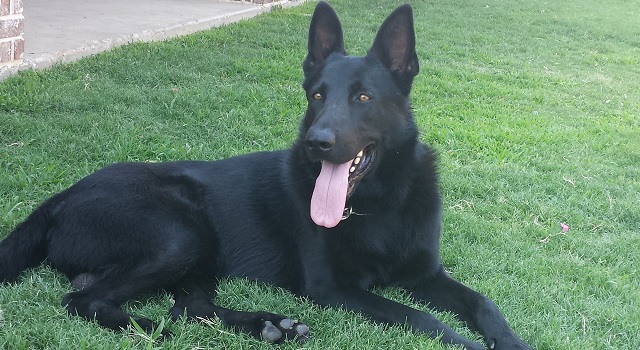
Meeka is my black six year old German Shepherd.   When I first saw her, her teats were distended and I found that at 2 years old she’d whelped 3 litters.  It broke my heart.  I asked the two Mexican guys that owned her how much they wanted for her. I bought her on the spot.  I took her to the dog wash on the way home and discovered she’d never been washed or petted.  I had her spayed 3 days later…. That was the best day of her life.  Now four years later, Meeka is all about family and her pack.  She’s happy to be in a family that cares for her.  She’s not interested in being the #1 dog.  She’s just content to “be”. She’s lost 2 dog companions, but she made it through the grief and loves life.

black.german.shepherd.2

Here’s my Meeka Learning Lesson:  Not everybody has a loving family.  Appreciate the family you have. Learn to just “Be”.

Harley is my wife’s dog.  He’s a 14 year old Chow/Shepherd mix.  Harley is blind and old.  He’s the Dog-Father.  Harley likes to growl at what he can’t see (which is almost everything) and barks when any visitor comes to the house. Harley’s bark is definitely worse than his bite.  Underneath his gruff exterior, Harley is a real softy.  He will growl and bark, but he is a real “love bunny”.   He loves to be loved…. But he is real protective.  My wife tells me I’m the only man Harley didn’t growl at when we first met.  I feel special.

Harley
Harley

Harley teaches me this:  It’s OK to be protective and gruff…. But remember to Accept Love..

SWAT Team was a pit bull that lived to be 7 years old.  That’s young.  He was euthanized three summers ago due to a degenerative disease.  SWAT was 70 pounds of pure muscle.  I got him as a rescue dog with “fight cropped” ears and he looked menacing.  But, SWAT loved kids and pooped ice cream.  He didn’t have a mean bone in his body.  SWAT, however was addicted to the “red dot”.  He would chase it until he dropped.  I’d run the “dot” under a chair and he’d wait hours for it to come out.  SWAT was always in a great mood and was a 100% optimist.  He chased the red dot for years and never caught it…. Yet I could say “red dot” and he would start looking for it and get energized.  He was always optimistic that he could catch it.

SWAT the night before he passed away.

SWAT’s taught me that I should always enjoy life.  He taught me it doesn’t matter if you win or lose… Play the Game and Be Optimistic.

Zoe is my step-daughter’s shih-tzu/yorkie mix.  Zoe is 7 years old going on 7 months.  She is very youthful and puppy-ish. She tolerates the “big” dogs, but knows she rules the roost.  She consistently steals Harley’s treats and chewys.  Harley takes it all in stride.  Zoe weighs about 5-6 pounds, but thinks she’s as big as 70 pound Meeka and 60 pound Harley.  She’s an instigator and manipulator.  She goes for what she wants and doesn’t let her size be a limitation.

Zoe
Zoe

Zoe’s lesson for me is don’t let others put limits on you because of what they see.  Be your true selfBe bigger/more/better than what others see on the surface. Don’t live under their limitations.

Hunter was a black and tan traditional German Shepherd I got because he was too aggressive for the owner.  Hunter never even snarled at me.  The family I rescued him from was amazed at the immediate bond we had.  Hunter was a protector.  I’ve had more than a dozen Shepherds over the years and he was clearly the most over-aggressive domestic dog I’ve seen.  Not to me or the family… But to anybody else he was a real “land shark”.  I hired a dog trainer. I consulted a behaviorist. I talked to my K9 handlers from work.  Nothing seemed to work to calm Hunter down.

After 4 months I noticed Hunter was not pooping right.  We went to the vet.  As it turns out Hunter had a disease and he could not process protein. He was literally starving.  He could eat and the protein would not absorb.  He was dying.  The vet seemed to think that this disease may have had something to do with his aggression. A hungry dog can be a mean dog.

There is no cure for his disease.  Hunter had to be euthanized.  I cried like a baby.  I’m welling up in tears as I write now and it’s been almost 2 years.

shepherd

What I learned from Hunter goes deeper.  Even love can’t cure some things.  Sometimes when things are not fixable you must let them go.  It’s hard to admit, but sometimes death is a more kind option than life.  It would have been more cruel to keep him alive and watch him starve to death.  Know when to let go.

As I read this I realize it seems anthropomorphic…..I’m projecting human emotions to animals…. And maybe I am.  But maybe I’m just letting the universe teach me some lessons I need to know.  I just hope I can remember to be as smart as my dogs and:

  1. Appreciate my family
  2. Learn to “Be”
  3. Accept Love
  4. Play the Game
  5. Be Optimistic
  6. Be your True Self
  7. Be more than just what others see in you
  8. Love can’t cure all
  9. Know when to let go

And of course, Your mileage may vary.

Dr Jay

Who is Your Hero?

“A hero is no braver than an ordinary man, but he is brave five minutes longer.”

Ralph Waldo Emerson

As a culture we’ve confused celebrity with heroism. We’ve confused fame with nobility. I am saddened by this thinking.

Being considered a hero used to mean you had to have accomplished something that was significant or contributed to society.  You walked on the moon (Neil Armstrong) or led civil rights (Dr King) or averted a nuclear war (Cuban Missile Crisis, President Kennedy) or explored and developed new areas (Daniel Boone) or led an expedition (Lewis & Clark) or conquered the highest mountain (Edmund Hillary) or did something.

Today, most of the celebrity “heroes” are music moguls or athletic stars: They are entertainment figures. I believe music and sports have a place in culture and there are notables in both fields.  Some notables are iconic…. But not heroes. They are famous… But not heroes.  They have celebrity, but are not heroes.

I guess it all comes down to your definition of “hero” or “heroine”.   The generally recognized definitions of hero are: :

  • a mythological or legendary figure
  • one admired for great courage or noble qualities
  • an object of extreme admiration and devotion

The word “hero” comes from Greek “heros” meaning demi-god.  A demi-god is one who isn’t quite a god yet, but has more power than a mere mortal.  To be clear, I’m using the term “hero” which is the masculine form.  “Heroine” implies the same, but in feminine form.  “Heroine” was first used in c.1650.

Webster’s first definition seems to fit the form of demi-god.  Persons held in mythological stature (sometimes fables) from embellished stories passed through generations (Paul Bunyan, Johnny Appleseed, Robin Hood). Or “super-hero” fantasy characters (Superman, Bat-man, etc.)

For me, the second definition is the one that resonates.  Those people who demonstrate courage or bravery and maintain noble qualities (9/11 responders, combat veterans, those working to help less fortunate: nurses, firefighters, police officers).  These are the people that very seldom become famous but continue to do a difficult thankless job in spite of the lack of rewards.

A real hero is a mom who continues to “do the right thing” even when the no-good dad is nowhere to be found.  A real hero is the teacher’s aide who gives a hungry child a snack from her personal lunch stash.  A real hero is the anonymous citizen who shepherds a lost child until the child is safe.  A real hero is the Average Joe giving CPR until medics show up.  A real hero doesn’t have anything to do with popularity or celebrity.  Most heroes are the unsung ones.

I met a couple of real heroes yesterday.  I had the honor of helping at a fund-raiser for Special Olympics.  There I met a  married couple who happened to be corrections Captains. They have been volunteering for this charity for nearly two decades. Yesterday they spent a 12 hour unpaid Saturday helping make dreams come true for the less fortunate.  They are real heroes, yet there were no TV cameras or media blitz.  They did it because of their noble ideals.

The last definition of heroism is probably the most popular and disappointing (to me).  Idol-worship.  Fame based heroism.  I threw up a little in my mouth when I typed that.  Some celebrities rebel against this archetype– (“I am not a role model”- Charles Barkley).  However most celebrities revel in the hyperbole and believe the hero worship.

I don’t think I’ve ever understood our national fascination with celebrity.  I can’t identify the Kardashians out of a police line up. I think this has to do with my upbringing.  I grew up without television.  My mom was a religious nut and thought TV was evil.  She was serious about it.  My sister and I were not allowed to watch TV at friend’s houses and we were trained to turn away from televisions when we saw them on display in a department store.  Weird, huh?

There were some good side effects from growing up without TV.  I became a prolific reader.  I learned to listen and talk with anybody. I never idolized sports figures nor TV celebrities. The people I held in esteem as heroes were ones I met through our social circles (Lester Roloff, Fred Sink, Joe Hege) or ones I read about (Charles Lindbergh, Amelia Earhardt, Harry Truman, Apostle Paul, Lincoln, Gandhi, Da Vinci, Shakespeare, Newton, Helen Keller, and the list goes on).

But this isn’t about me.  This is about how we as leaders can effect positive change in our circles of influence. How can we create a shift away from idol worship to true heroism?  Here are some ideas:

  • Set the example. Know your own heroes.  Make your ‘walk’ congruent with your ‘talk’
  • Look for unsung heroes and acknowledge/reward them. What gets rewarded get repeated.
  • Teach values other than becoming famous or popular.  Realize social media “likes” or being popular aren’t good indicators of character or nobility.
  • Know good character is a developed trait. More practice makes better character.  Build yours and theirs.
  • Recognize every real-world hero is human and fallible– They make mistakes AND may still be heroic.  Just because you make mistakes doesn’t necessarily make your actions less heroic. (Think heroic effort)
  • Understand “anti-heroes” and learn why we like them (Bonnie & Clyde, Sopranos, Blackbeard)

Psychologically we need heroes. They give us inspiration and help us aspire to our “higher selves”. And we will find heroes… Consciously or not.  It’s better to make your heroes ones you choose, not ones the media or your boss or your social circle chooses for you.  You are in charge of your own narrative. You can live the life you’ve imagined!

Of course, your mileage may vary.

Dr Jay