Love Thyself

IloveYou

I’ve prescribed a small seemingly silly exercise to dozens of past therapy clients.

It’s an “I love me” exercise. I coach the client to look into a mirror and say “I love you” to themselves aloud. The instruction is to say “I love you” three times while maintaining eye contact with themselves in the mirror.  When they repeat “I love you” they place emphasis on a different word each time they use the phrase.

  1. I love you”
  2. “I love you”
  3. “I love you

Yeah, I know it may seem cheesy.  And maybe it is, but I have never had a client deny there was value to this exercise.

Loving one’s self is a challenge for most people.  Most of us have heard things like “He’s too big for his britches” or “She has an awfully high opinion of herself” or “I wish I could buy him for what he’s worth and sell him for what he thinks he’s worth.”  We’ve been indoctrinated to not love ourselves.

We’ve definitely been indoctrinated not to say “I love you” to ourselves.  We usually think it’s only correct to hear it from another person.  This is not true.  We need to hear it, feel it, and understand self-love, independent of the good opinion of others.

If you begin this practice it may be uncomfortable.  If your loved ones see you doing this, they may question your sanity.  Talking out loud to one’s self is usually suspicious.  When you feel more comfortable with the exercise you can ‘up the ante’. Try this, stand in front of a full length mirror while you’re naked and say “I love you, ALL of you”.  Of course you’ll wanna do that one in private…. Being naked at the mall is definitely frowned upon.

Most clients who stay faithful to this practice notice some internal dialogue shifts within themselves. Personally when I was first coached to try this (about 20 years ago) I noted more smiling at my foibles instead of berating myself for goofy antics.

A minor shift in internal dialogue does not seem like a big deal…. But it is.  If you’re like most of us, you are the harshest critic you have.  This harsh silent internal self-criticism has a devastating cumulative effect.  Release the self-criticism and replace it with self-love.

Most of us can identify our objects of affection easily…. We love our spouses, our kids, our pets, our jobs, even our vehicles.  We love a favorite meal or restaurant.  We love our sports teams. We love a favorite vacation spot.  We love TV shows and sometimes even well-written or acted characters in those shows. We love and idolize stars and actors we do not know. We love music of a particular genre or era.  We love many many things…. Add one more conscious object of affection.  YOU.  Remember to Love Thyself.

Of course, Your mileage may vary.

Dr Jay

No Quick Fixes

KidTVNO

I knew American society was in trouble13 years ago when Dan Rather had an “in-depth” report on drugs in schools that lasted about 2 minutes.  I can’t write a synopsis to this article in 2 minutes, yet here is a major news icon probing an epic issue with a TV presence about the length of a couple of car commercials and calling it “in-depth”.  Yeah, right.

I think our fascination with believing complex problems can be solved or explained quickly goes back decades.

Our problem began in the 1950’s with the proliferation of television.  GI’s came back from World War II and began living the American dream.  They created suburbs, tract housing, the baby-boom, and bought TVs.  Boomers (as we are called) were born from 1946 -1964.  Being children of “the greatest generation” was lost on us for most of our lives.  We knew things our parents couldn’t have imagined (we thought).  We grew up as TV watchers and TV taught us everything we needed to know (we thought).

TV was more influential that society imagined. In the 1950’s most television programming was a spin-off of vaudeville.  Vaudeville was the primary entertainment media before radios and moving pictures.

The 1950’s TV reflected vaudeville values.  TV shows were a way to generate revenue from commercials through wholesome entertainment. Based on success of some shows (I Love Lucy, The Honeymooners)  TV writers created one hour format dramas and half hour format comedies.  The situation comedy was born.  Television was changed forever.

Sitcoms are designed to fit into a half hour time slot with 22 minutes of programming and 8 minutes of commercials.  The plots are usually thin with familiar characters in a familiar setting.  A show usually starts with a misunderstanding or problem (often cloaked in humorous or sarcastic dialogue), a comic interpretation of the problem, and the resolution of the misunderstanding or problem.  All within 30 minutes.

TV drama series weren’t different.  Bonanza, Little House on the Prairie, Kojak, Star Trek, Baretta, Streets of San Francisco… etc… All had a similar formula: problem,  plot complication, conflict, and resolution.

The tropes, wardrobes, lingo, and attitudes may have been different, but what didn’t change is the resolution of the problem in 30 – 60 minutes.  This subtle suggestion that complex human problems can be solved in 60 minutes crept into the subconscious mindset of most baby-boomers who were subjected to thousands and thousands of hours of this misinformation.

Resolving complex human issues in 30-60 minutes is an illusion.   So is television, but a child absorbing this information does not know what is real and what is illusory.  There’s the problem.  As we know intellectually, are very few quick-fixes for people problems.  We now have a generation of parents/grandparents/teachers/leaders who don’t recognize this. They want results NOW!  They want an “in-depth” analysis in 2 minutes.  They want a “quick fix”. And most of us have no idea where the internal sense of “I want it now” comes from.

As a generation we created faster everything: cars, bikes, clothing (wash & wear), Velcro, home appliances, microwaves.  We built speedier technology:  transistors over tubes,  calculators vs slide rules, the internet, facsimile machines,  mobile phones, computers, going to the moon, and more.  What we can’t do is solve complex societal issues or interpersonal problems through short cuts and technology.  Why?  Because you can’t fool mother nature.

Example: There is no short-cut to parenting.  Kids still go through developmental stages as they have for centuries. Technology can’t replace parental responsibility or human development.  TV isn’t a baby-sitter.

Example:  There is no short-cut to a good marriage.  Partners have to work together through issues.  Hurt feelings are not always cured in 30 minutes or less.  Technology can’t fix a failing marriage.

Example:  Farmers know you can’t fool mother nature.  If a farmer fails to prepare and plant the field there are no “hacks” to make crops grow.  There is a growing season and nature takes the time it takes.  If you harvest too soon the results are not good.  If you delay harvest the results are not good.  A farmer has to work at the speed of nature.  Period.

In contrast with nature, society moves faster as media speed increases.  Organic solutions do not get faster.  We can’t fix people problems in 30 minutes or less.  We’ve got to think like the  farmer… We have to work at the speed of nature.

There is no 2 minute “in depth” analysis.  There are highlights, talking points, main ideas… yes… But solutions go much deeper.  We need to forget about the quick fix when it comes to people problems.  In my job this is not a popular stance.  As a system we have to work on lasting solutions.

I’ve got some ideas to help move us through this problem…. What are yours?

  • Stop settling for the quick fix
  • Observe and understand nature
  • Become more mindful of what’s happening NOW
  • Think like a visionary… think long term… act that way
  • Stop, listen, learn, teach
  • Be patient with change
  • Remember humans are not technology

Of course, your mileage may vary.

Dr Jay

Lessons I’ve Learned From My Dogs

I’ve been a dog guy all my adult life.  I don’t trust people who don’t like dogs… And I trust dogs when they don’t like people…

Meeka is my black six year old German Shepherd.   When I first saw her, her teats were distended and I found that at 2 years old she’d whelped 3 litters.  It broke my heart.  I asked the two Mexican guys that owned her how much they wanted for her. I bought her on the spot.  I took her to the dog wash on the way home and discovered she’d never been washed or petted.  I had her spayed 3 days later…. That was the best day of her life.  Now four years later, Meeka is all about family and her pack.  She’s happy to be in a family that cares for her.  She’s not interested in being the #1 dog.  She’s just content to “be”. She’s lost 2 dog companions, but she made it through the grief and loves life.

black.german.shepherd.2

Here’s my Meeka Learning Lesson:  Not everybody has a loving family.  Appreciate the family you have. Learn to just “Be”.

Harley is my wife’s dog.  He’s a 14 year old Chow/Shepherd mix.  Harley is blind and old.  He’s the Dog-Father.  Harley likes to growl at what he can’t see (which is almost everything) and barks when any visitor comes to the house. Harley’s bark is definitely worse than his bite.  Underneath his gruff exterior, Harley is a real softy.  He will growl and bark, but he is a real “love bunny”.   He loves to be loved…. But he is real protective.  My wife tells me I’m the only man Harley didn’t growl at when we first met.  I feel special.

Harley
Harley

Harley teaches me this:  It’s OK to be protective and gruff…. But remember to Accept Love..

SWAT Team was a pit bull that lived to be 7 years old.  That’s young.  He was euthanized three summers ago due to a degenerative disease.  SWAT was 70 pounds of pure muscle.  I got him as a rescue dog with “fight cropped” ears and he looked menacing.  But, SWAT loved kids and pooped ice cream.  He didn’t have a mean bone in his body.  SWAT, however was addicted to the “red dot”.  He would chase it until he dropped.  I’d run the “dot” under a chair and he’d wait hours for it to come out.  SWAT was always in a great mood and was a 100% optimist.  He chased the red dot for years and never caught it…. Yet I could say “red dot” and he would start looking for it and get energized.  He was always optimistic that he could catch it.

SWAT the night before he passed away.

SWAT’s taught me that I should always enjoy life.  He taught me it doesn’t matter if you win or lose… Play the Game and Be Optimistic.

Zoe is my step-daughter’s shih-tzu/yorkie mix.  Zoe is 7 years old going on 7 months.  She is very youthful and puppy-ish. She tolerates the “big” dogs, but knows she rules the roost.  She consistently steals Harley’s treats and chewys.  Harley takes it all in stride.  Zoe weighs about 5-6 pounds, but thinks she’s as big as 70 pound Meeka and 60 pound Harley.  She’s an instigator and manipulator.  She goes for what she wants and doesn’t let her size be a limitation.

Zoe
Zoe

Zoe’s lesson for me is don’t let others put limits on you because of what they see.  Be your true selfBe bigger/more/better than what others see on the surface. Don’t live under their limitations.

Hunter was a black and tan traditional German Shepherd I got because he was too aggressive for the owner.  Hunter never even snarled at me.  The family I rescued him from was amazed at the immediate bond we had.  Hunter was a protector.  I’ve had more than a dozen Shepherds over the years and he was clearly the most over-aggressive domestic dog I’ve seen.  Not to me or the family… But to anybody else he was a real “land shark”.  I hired a dog trainer. I consulted a behaviorist. I talked to my K9 handlers from work.  Nothing seemed to work to calm Hunter down.

After 4 months I noticed Hunter was not pooping right.  We went to the vet.  As it turns out Hunter had a disease and he could not process protein. He was literally starving.  He could eat and the protein would not absorb.  He was dying.  The vet seemed to think that this disease may have had something to do with his aggression. A hungry dog can be a mean dog.

There is no cure for his disease.  Hunter had to be euthanized.  I cried like a baby.  I’m welling up in tears as I write now and it’s been almost 2 years.

shepherd

What I learned from Hunter goes deeper.  Even love can’t cure some things.  Sometimes when things are not fixable you must let them go.  It’s hard to admit, but sometimes death is a more kind option than life.  It would have been more cruel to keep him alive and watch him starve to death.  Know when to let go.

As I read this I realize it seems anthropomorphic…..I’m projecting human emotions to animals…. And maybe I am.  But maybe I’m just letting the universe teach me some lessons I need to know.  I just hope I can remember to be as smart as my dogs and:

  1. Appreciate my family
  2. Learn to “Be”
  3. Accept Love
  4. Play the Game
  5. Be Optimistic
  6. Be your True Self
  7. Be more than just what others see in you
  8. Love can’t cure all
  9. Know when to let go

And of course, Your mileage may vary.

Dr Jay

Who is Your Hero?

“A hero is no braver than an ordinary man, but he is brave five minutes longer.”

Ralph Waldo Emerson

As a culture we’ve confused celebrity with heroism. We’ve confused fame with nobility. I am saddened by this thinking.

Being considered a hero used to mean you had to have accomplished something that was significant or contributed to society.  You walked on the moon (Neil Armstrong) or led civil rights (Dr King) or averted a nuclear war (Cuban Missile Crisis, President Kennedy) or explored and developed new areas (Daniel Boone) or led an expedition (Lewis & Clark) or conquered the highest mountain (Edmund Hillary) or did something.

Today, most of the celebrity “heroes” are music moguls or athletic stars: They are entertainment figures. I believe music and sports have a place in culture and there are notables in both fields.  Some notables are iconic…. But not heroes. They are famous… But not heroes.  They have celebrity, but are not heroes.

I guess it all comes down to your definition of “hero” or “heroine”.   The generally recognized definitions of hero are: :

  • a mythological or legendary figure
  • one admired for great courage or noble qualities
  • an object of extreme admiration and devotion

The word “hero” comes from Greek “heros” meaning demi-god.  A demi-god is one who isn’t quite a god yet, but has more power than a mere mortal.  To be clear, I’m using the term “hero” which is the masculine form.  “Heroine” implies the same, but in feminine form.  “Heroine” was first used in c.1650.

Webster’s first definition seems to fit the form of demi-god.  Persons held in mythological stature (sometimes fables) from embellished stories passed through generations (Paul Bunyan, Johnny Appleseed, Robin Hood). Or “super-hero” fantasy characters (Superman, Bat-man, etc.)

For me, the second definition is the one that resonates.  Those people who demonstrate courage or bravery and maintain noble qualities (9/11 responders, combat veterans, those working to help less fortunate: nurses, firefighters, police officers).  These are the people that very seldom become famous but continue to do a difficult thankless job in spite of the lack of rewards.

A real hero is a mom who continues to “do the right thing” even when the no-good dad is nowhere to be found.  A real hero is the teacher’s aide who gives a hungry child a snack from her personal lunch stash.  A real hero is the anonymous citizen who shepherds a lost child until the child is safe.  A real hero is the Average Joe giving CPR until medics show up.  A real hero doesn’t have anything to do with popularity or celebrity.  Most heroes are the unsung ones.

I met a couple of real heroes yesterday.  I had the honor of helping at a fund-raiser for Special Olympics.  There I met a  married couple who happened to be corrections Captains. They have been volunteering for this charity for nearly two decades. Yesterday they spent a 12 hour unpaid Saturday helping make dreams come true for the less fortunate.  They are real heroes, yet there were no TV cameras or media blitz.  They did it because of their noble ideals.

The last definition of heroism is probably the most popular and disappointing (to me).  Idol-worship.  Fame based heroism.  I threw up a little in my mouth when I typed that.  Some celebrities rebel against this archetype– (“I am not a role model”- Charles Barkley).  However most celebrities revel in the hyperbole and believe the hero worship.

I don’t think I’ve ever understood our national fascination with celebrity.  I can’t identify the Kardashians out of a police line up. I think this has to do with my upbringing.  I grew up without television.  My mom was a religious nut and thought TV was evil.  She was serious about it.  My sister and I were not allowed to watch TV at friend’s houses and we were trained to turn away from televisions when we saw them on display in a department store.  Weird, huh?

There were some good side effects from growing up without TV.  I became a prolific reader.  I learned to listen and talk with anybody. I never idolized sports figures nor TV celebrities. The people I held in esteem as heroes were ones I met through our social circles (Lester Roloff, Fred Sink, Joe Hege) or ones I read about (Charles Lindbergh, Amelia Earhardt, Harry Truman, Apostle Paul, Lincoln, Gandhi, Da Vinci, Shakespeare, Newton, Helen Keller, and the list goes on).

But this isn’t about me.  This is about how we as leaders can effect positive change in our circles of influence. How can we create a shift away from idol worship to true heroism?  Here are some ideas:

  • Set the example. Know your own heroes.  Make your ‘walk’ congruent with your ‘talk’
  • Look for unsung heroes and acknowledge/reward them. What gets rewarded get repeated.
  • Teach values other than becoming famous or popular.  Realize social media “likes” or being popular aren’t good indicators of character or nobility.
  • Know good character is a developed trait. More practice makes better character.  Build yours and theirs.
  • Recognize every real-world hero is human and fallible– They make mistakes AND may still be heroic.  Just because you make mistakes doesn’t necessarily make your actions less heroic. (Think heroic effort)
  • Understand “anti-heroes” and learn why we like them (Bonnie & Clyde, Sopranos, Blackbeard)

Psychologically we need heroes. They give us inspiration and help us aspire to our “higher selves”. And we will find heroes… Consciously or not.  It’s better to make your heroes ones you choose, not ones the media or your boss or your social circle chooses for you.  You are in charge of your own narrative. You can live the life you’ve imagined!

Of course, your mileage may vary.

Dr Jay

I’m Not in Charge

Jack Canfield was the guy who made Albert Ellis easy to understand for me.

Jack is the Harvard educated author, motivational speaker, and seminar leader who co-created the Chicken Soup for the Soul series of books.  Jack started as a high school teacher and co-authored a book for high school teachers on ways to develop self-esteem in students. He successfully marketed his book in the National Enquirer and created his first fortune by sheer will-power.

I met Jack Canfield in 1993 when I was contracting for a major training company.  Jack was hired as the “big gun” speaker for our annual conference.  It was a joy to meet him.  Jack taught a very simple equation for success and happiness—

E  +   R    =   O

Event plus Response equals Outcome.

Event– Things in life we have no control over (bosses, weather, kids, customers, everything external to us)

Outcome– What happens in life. (Results, your life, the end, success or failure)

Response– The only thing in life over which we have control.

Jack’s bottom line is this:

If you want better results (outcomes) create better responses, because you can’t change events. (You’re not in control of ANYTHING except your response… get used to it)

Albert Ellis was a Columbia University PhD in clinical psychology.  Albert Ellis’ REBT is probably the most influential psychological concept present in the therapy community today. In a poll of psychologist and therapists Ellis was ranked as #2 All Time Most Influential Psychologist right behind #1 Carl Rogers and ahead of #3 Sigmund Freud.

Ellis died in 2007 and published over 60 books.  Most of his works were written for PhD students and practicing clinicians.  He attempted to make his theories easy to understand. That didn’t work.  He developed the ABC of REBT (rational emotive behavior therapy).

To understand ABC of REBT you need a PhD or JD or LLD or Lucky Charms decoder ring or a really patient professor.

A = Activating Event (things that happen)

B = Belief System (hidden from view)

C = Consequence  (results in life)

Ellis said we often make decisions about things in an irrational thinking style and don’t get the consequences we want because of mistaken beliefs (that we don’t know or can hardly understand).  I’m paraphrasing, of course.

In short:

You’re not in control of anything except your belief system, which you don’t understand. 

Both scholars are essentially saying the same thing:

There is very little we control in life. Control over external things is an illusion.

I bring this up because this weekend I forgot what I know.  I forgot to “Let it Be Easy”.  I still think I can control the world.  I can’t.  I’m not in charge.  I’m only in charge of my response and belief system.  That’s it.  Nothing else.

I’m not advocating an abdication of responsibility… I don’t believe some sort of hyper-Calvinism that says all the world is predetermined and predestined and “whatever will be will be”. I’m suggesting that I must recognize what I do have control over and manage that effectively.  When I get control of my responses and what I believe, I’ll have reached more success than I can imagine!

I guess my mistakes keep me grounded in my humanity and work to keep me humble…. Learn. Grow. Teach…. Where have I heard that before?

Of course, your mileage may vary.

Dr Jay
Growth is Optional

In my profession, time on the job is a most valued asset.  A 12 year officer is more valuable than a 6 year officer.

I’m not certain this value serves us as a profession very well.  It’s possible to have ten years experience and it’s possible to have one year experience repeated ten times…. Sometimes it’s hard to know which is which.

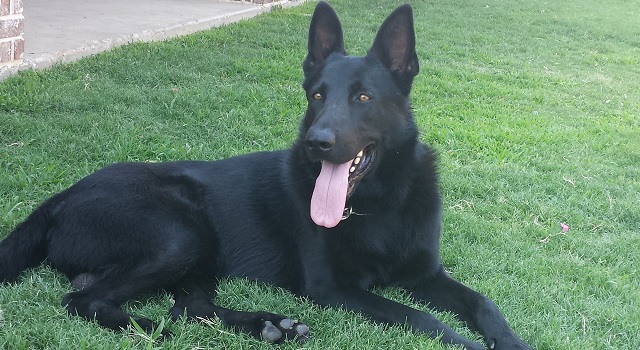
One of my team leaders would finish police briefing every day with this catch-phrase:  “Drive fast. Take chances”.  Most sergeants close briefing with “Be careful” “Stay safe”  etc, etc.  But ‘Blanco’ (as he is known) knows the difference between 10 years and 1 year repeated 10 times.

OldCop

Blanco was not supporting reckless or risky behavior.  Instead he was passionate about learning something new everyday.  He was about growth.  Blanco knows that if we don’t challenge ourselves we will not grow. He knew that while growth is optional, the options to growth are not good.

It’s like the apples on the trees in my back yard…. Either they are growing or they are rotting on the vine.  In nature, growth is NOT optional.  It’s either growth or slow death.

When I started working for Blanco, he asked me what my goals as a police officer were.  I told him I wanted to become part of the leadership team: I wanted to make Sergeant within 5 years.   ‘Blanco’s’ advice:  Do what makes you uncomfortable. Take risks.  Try new things.  In short he was telling me to not die on the tree… He told me to continue growing.

So my true goal is growth.  Learn something new everyday.

Of course your mileage may vary.

Dr Jay

How I Got Here From There…. Sorta

I’m a 55-year-old street cop.

Most guys my age in this job are seasoned police professionals planning for retirement or working senior positions as administrators in specialty functions.   Not me.  I entered the police academy at age 52.  My academy peers had an average age of 27.

I’ll admit to you that police work (particularly patrol) is physically a younger person’s job.  But perhaps youth is wasted on young people.  It’s interesting to show up on a call with peers 20 – 25 years younger than I am.  Yet these peers often have 10-15 years more civilian police experience than I do.  Invariably the citizens we respond to assist assume I’m the senior officer.  And usually I let them think that.

I’ll tell you, there is no substitute for experience.  And it doesn’t really matter if the experience is life experience or work-life experience.  Ya can’t train experience.

What I know and have experienced in my few years as a civilian police officer is that most of the time the “best” solution isn’t a “police” solution.  And that is disappointing for many of the younger people doing my job.  Most of the time police work is simply people work.  Old man’s work.  Boring. Not glamorous.  Not “Cops” from TV. Not CSI.  This is good news for me.

So the question I started to answer, before my ramble is: “How did I get here?”  Well, that answer depends on who you ask….

In 2002 (42 years old) my world started collapsing.  I was diagnosed with advanced stage Type II non-Hodgkin  Lymphoma and cancer in my lymph nodes.  My oncologist said I had about 6 months to live…. If I was lucky.

Until that time in life I’d been a through several “careers”.  I had been a law enforcement specialist in the Air Force (5 years enlisted/5 years officer). I’d owned and operated half a dozen successful restaurants and lounges.  I had a lucrative contract as an adjunct instructor at a university (teaching leadership, management, coaching, communications, and applied psychology).  I was a contract trainer for a professional training company.  I was a mini real-estate guru (I had several houses and one apartment building). I had a couple years of 7-figure income. I was a divorced father with a good daddy-daughter relationship.  I was “set”.

The cancer diagnosis rocked my world.  It changed my world view.  I’ll admit cancer is a cruel mistress. She took my ability to earn, my health, and my material possessions.  I wrote a book about it How to Live Like You Were Dying.

BC (before cancer) I was planning on becoming financially stable through the food and beverage business and real estate.  When I got sick I couldn’t do what I’d been doing.  I realized my mortality was real.  Eventually I went financially bankrupt.

AC (after cancer) I realized that my financial future was elsewhere.  I changed my life.  I used my education and opened a therapy practice.

When the real estate bubble started collapsing (in 2008) everybody’s finances changed.  I mistakenly thought I was employable at my education and age level.  I was wrong.

I had 11 years military leadership experience, 10 years supervision/management experience, 10 years teaching/training experience, and 15 years of creating, owning, and running my own business experience. I have an associate degree in Criminal Justice, a bachelor’s degree in Human Resources, a master’s degree in Organization and Management, and a doctorate (non-accredited) in Human Behavior Psychology.  But I was unemployable.

370 job applications gave me zero job offers.

I cut my resume by two-thirds.  I dropped mention of my advanced degrees.  I got a job offer selling cars.

Wanna know the hardest thing about selling cars?  Admitting to your friends that you sell cars.

Another side note:  There are a lot of corollary relationships between police work and car sales.  Both are people jobs. Both are problem solving jobs. Both are stressful. Both deal with people you’d sometime rather not deal with (in car sales it’s the management–in police work it’s the criminal element). Both are misunderstood by the public and probably neither deserve the stereo-types they have.  But I digress.

After 2 months of car sales I got an entry-level job interview from a large hospital system.  The hiring nurse asked me if I knew what a CNA (certified nursing assistant) did.  I explained that a CNA was a glorified “poop and pee patrol”.  I got the job.

After 3 years of glorified “poop and pee patrol” I had some decisions to make.  I was almost 50 years old.  What would I do when I grew up?

I did analysis of my skills, my experience, my education, my desires, and my goals. I realized I still had the law enforcement mind-set.  I still had the desire to serve the public as a police officer.  I still wanted to be a “good guy”. I want be be a cop.

I started to get myself into physical condition. I applied to every agency with an opening within driving distance.  I got several interviews.  Then I won the lottery.  I got a code enforcement officer job at my current agency.  A code enforcement officer is like “police lite”.  Code work equals: working out of the police department, driving a vehicle with a police emblem, wearing a bullet-proof vest, being dispatched on the police radio, and working on “liveability” issues (without a criminal nexus) with no gun, no arrest authority, and minimal training.

Fourteen months later the (then) Chief took a chance on a 51 year old code guy and promoted me to police officer.  Nineteen weeks of academy, sixteen weeks of field training, and eighteen months of probation later I emerge as “the old guy”.

Just before I entered the academy I chatted with a member of our department who was retiring.  We were both 52.  I asked him “Knowing what you know, would you do it all over again?”  He responded “Yep. Just not at your age.”

Of course, your mileage may vary.

Dr Jay