I Am a CIT Evangelist

e·van·ge·list/əˈvanjələst/ noun

  • a person who seeks to convert others to the CIT thinking, especially by public exhortation and living the CIT principles.


“Evangelist” is a great ‘tag’ to start because every great idea begins with passionate and great thinking. Great ideas are pushed into being by, change agents or “evangelists”. Evangelists don’t just drink the Kool-Aid, they live it and truly believe in the innovation they espouse.

What separates true evangelists and change agents from the rest of the flock is the intangible fire they possess. Evangelists are willing to bet their political capital and careers on a new ‘disruptive’ process or idea. Evangelists will talk about their project or interests; not just to those interested, but to their colleagues during lunch, their friends when not working, and more.

Evangelists are very persuasive. They are absolutely essential to getting buy-in from the rest of the organization. They are also the ones to convert the first couple of flagship participants. If at least a percentage of your crisis intervention team does not consist of evangelists, the team has a good chance of failing.

Why? Because evangelists conduct themselves like mini-CEO’s. And that’s what you need at a time when roles and responsibilities are still in the process of being defined. You need go-getters, self-starters, and learn-as-you-go people who are willing to put on different hats rather than expect to delegate to an assistant.

Evangelists get their hands dirty. They are not just theorist—they are practitioners. They are willing to work, do, and try. They are willing to show a critical eye, but are also willing to find alternates instead of just criticize.

Only an evangelist can convince a crusty patrol veteran to try a small innovation in dealing with the mentally ill consumer.

Further, evangelists will help you to recruit other strong talent. The intensity of evangelists will probably scare off ho-hum bench-warmers and attract the A-team the big change initiative will need, especially in the formative months.

Years ago one of the men who helped form my world view taught me:

“Everything rises or falls on leadership. Everything.”

And I believed him. He was a true leadership “evangelist”. Dr. Lee Roberson (1909 – 2007), the founder and Chancellor of an alma mater, was fanatically about leadership. And as a result of his fervor, he impacted two generations of leaders.

I am a CIT evangelist. Join the crusade with me, won’t you?

Of course, your mileage may vary…

Dr. Jay

What Can I Trust?

I am haunted by my hospitalist words. It was the next day in the ICU,  after being admitted for my CVA (Cerebrovascular accident).   My doctor spoke with a slight Russian accent.  Her tone was very ‘matter of fact’, like a weather forecast, or like an un-engaged bureaucrat issuing droll hum-drum tax information. She said:

“You’ll never work as a police officer again…. Maybe it’s time you get nice office job”

I was stunned. I thought “you don’t know me”. I was outraged. I was hurt. I couldn’t hear anything else this doctor told me. I insisted that she leave my hospital room. How could this doc know this with such certainty?  I didn’t trust her words.

It’s almost 8 months since she told me this.  I’m still not working as a “real” police officer.  I’m still on light duty.   Her prophecy has slightly cracked my shell and I finally conceded she might be correct.  Last week my speech therapist told me “you’re not progressing as we thought you should have been”.   I still have trouble remembering how to pronounce words.  I can see an object and can identify it, but I cannot remember or say the word to identify the object.   I can’t trust my brain.

I was describing a church pew.  The word “pew” wouldn’t come to my thinking.  I could only remember how to say it when the person I was talking with asked me “pew, right?”  Not that “pew” comes out in conversation very frequently, but it was disturbing I couldn’t remember a word that is this familiar to me.  I can’t trust my vocabulary.

I like to sing.  I’m not a professional singer, but I enjoy it.  I’ve been singing all my life and literally knew the lyrics for over 1,000 songs.  Now I can remember the melody line, but not the lyrics.  This week I spent hours trying to remember the title of our national anthem.  Weird, since I’ve performed “The Star-Spangled Banner” several times.  Now I can remember the title and the opening line — the rest of the lyrics continue to elude me.  It’s frustrating, I can’t trust my memory.

There are more foibles I am unwilling to share in this forum.

I did chat with the city’s disability guru.  She was pleasant, but seemed to know something I wasn’t willing to admit.  She said when I am ready to come back to work it “might not be at the police department”.  Strange she knows more about my possibilties than I know.  I don’t trust the city’s best intentions.

I’ve been very absent writing because it is very hard to write for me right now.  Not the content…. That’s the easy part.  So that I do not sounding like a whiner…. And putting these ideas in readable sentences that make sense…. And not showing my self-disgust for not getting better quickly…. These are the challenges.   I don’t trust my writing.

AFGO— Another freakin’ growth opportunity…. I just don’t trust it….

Of course, your mileage may vary.

Dr Jay Irvin


Guilt by Light Duty

stroke2

Since March this year I’ve been on ‘light duty’ as a police officer.  March 1, 2016 I had a CVA– a stroke– a brain attack.  As CVAs go, this was a mild one.  I was blessed.

Since then I’ve not been working as a uniformed patrol officer.  I’m writing this in late June and will be away from patrol until early October.  I’ve had a lot of time to think.

My current ‘light duty’ assignment is to create/write/develop a curriculum for the Crisis Intervention Team (CIT) for the police department.  It’s a big job and a necessary one.  And I may be the best capable guy to do that… Considering my education, training, and expertise in training.    Originally I was to assist other CIT members developing the curriculum, but the focus changed; then I got the mandate to ‘just create’ the curriculum.

Being on ‘light duty’ is a pariah.  I’ve always had a hard time ‘belonging’ and this makes it harder.  I’ve heard comments such as “How long are you gonna keep gold-bricking?” and “You don’t look like anything is wrong” and “You sound like fine to me” and the best comment– “You must love this not having to be on patrol”.   Patrol staff is always short.  Officers on light duty create more work for the patrolling officers.  I feel guilty.

I don’t have a bandage or a sling or a cast or visible bruising.  My issues that prevent me from working patrol are unseen issues.  My language still isn’t right.  I still have a stammer and stutter.  I still search for correct words.  I still struggle with pronunciation of common words.   My writing is laborious.  I call my mis-speaking and mis-writing as “stroke-isms”.  Humor is best way (for me) to deal with what I’m going through.

My organization has been outstanding. The administration seems to be patient with my recuperation.  And I’m doing that which no-one else wants to do… And I like doing it.

To be a ‘true’ police officer I know I should never admit to liking anything. ‘Real’ police officers bitch and moan and complain about no matter the task.  That doesn’t work for me…. About 30 years ago I decided that I would enjoy whatever I do or wherever I am.

My goal is to enjoy my station in life or work and try to live with grace and patience.  I want to enjoy whatever I do.  I must find the value in my moments and like them.  Of course, to live with grace, I need to leave my ‘guilt by light duty’ behind.  This is a chore for me.

Self-improvement work continues…. doggone it…. Back to my chore.  Like I said, I’ve had a lot of time to think….

Of course, your mileage may vary…..

Dr Jay


Don’t be That Guy

stroke2

I work in a field where we’re known to “eat our young”.  I know that is not a flattering statement to say about a profession, but it’s truer than we want to admit. As a police officer you either figure it out or find yourself looking for a new job.  We smugly say “Yep, being a police officer is not for everybody” and give out walking papers like they were business cards.

Part of me is very happy there are high standards for police professionals.  With all the national scrutiny and the national dialogue not friendly with law enforcement, it does take a certain type of person to do this job. I used to be this type of guy.  Post stroke I’m having to find my way back to  who I used to be.  I feel I’ve been evicted of my identity.

For example, writing used to be therapeutic for me.   Now it’s a chore.  Simple police reports require more re-edit that I am used to doing.  Goofy.

I hope my grammar and syntax fluidity will come back too.  I’m having a challenge with homophones and spelling.  I know the different between there, their, they’re and by, buy, bye; but my writing hasn’t displayed my knowing!

My friends tell me my speech is getting better…. by the week…. I saw a friend, whom I’ve known over 20 years, and commented he could not even really hear my verbal gaffes…. barely.  He is kind.  Improvement is good.

I’ve found a problem with me using gender and pronouns.  I’ve caught myself referring to ‘she’ when I’m talking about a ‘he’ … And vice-versa.  My spelling  is showing some inadequacies too.  I could not, for the life of me, spell ‘mannequin’.  I couldn’t even get my auto-correct to find the word for me…. I was able to find the spelling by my on-line thesaurus…. This week I forgot how to pronounce “opinion”… Which is odd, since I have some many of them…. Kinda funny for me, actually.

My doc tells me there isn’t much treatment (except time) and continue my therapies.  I feel like I have to continually explain myself.   We have protocol for physical maladies, but nothing for unseen neurological damage.  There is no cast to remove or there is no bruise to heal or there are no stitches to remove.  The healing is invisible.  This is a hard concept for “that guy”.

I will get my language and grammar and speaking capacities back.  The problem is I don’t know when.  The speech pathologist seemed to think of months… not years.  That was encouraging.  Yet, I have not been kind to myself.  I have been “that guy” to myself.  You know, the one who says “Just suck it up”.

The day I was hospitalized my language was about 30%.  It was apparent to anybody communicating with me.  A month later I was 75% (maybe).  Two and a half months later I’m 80% back.  These percentages are just my estimates.  The docs won’t give me percentages.

I have a stammer and stutter that I never had.  My speech issue exacerbate by stress– And this is a stress job.  (My internal “that guy” dialogue is beating me up for whining too much as I write this.)  Damn the humanity it all….

I still maintain I am blessed.  And I am humbled by this experience.  AFGO (Another freaking grow opportunity)….

Of course, Your mileage may vary

Dr Jay


Best Laid Plans

stroke2

It’s been a while since I’ve published any articles.  I didn’t plan on being so absent from my blog.   I seem more tentative in writing in my ‘post-stroke’ days.  Sad, really….

I’ve been having more challenges that I want to admit.  I was planning to do some speech therapy and planning go back to my life as normal…. But not so fast, it turns out.  Not so fast at all.

I planned on take the requisite 20-30 light duty days and transition back to my old world. I am a patrol officer for a medium city.  I take my profession serious and my obligation to the public and my organization very seriously.  We are short-staffed and my team needs me.   Apparently I’m sitting out for another month and perhaps more.  The doc said this takes time.

Mentally I think I’m back to the challenge. Verbally I’m not sure.  One of the therapist put a name on it “apraxia of speech”.  The American Stroke Association (ASA) defines it:

Apraxia of speech most often follows a stroke that affects the language-dominant hemisphere of the brain. It is usually associated with damage to the areas of the brain supplied by the left, middle cerebral artery. Apraxia of speech may range in severity from a complete inability to speak to very mild, barely detectable distortions of speech.

For me, usually I know the words I want to say. I understand the language. I recognize them if I read or hear them, I can even spell them. But I can’t remember how to pronounce the word.  This is a real challenge for me.  There are other issues…

I didn’t realize how much losing a large part of my verbalization ability upset my apple cart until one of my colleague told me how she saw it…. She said I as a very articulate communicator and could use words in a way 99% of the world will never have that ability.  “But now since your stroke, you’re having to identify who you are all again…”  Her insight hit me like a Mack truck. I’ve lost my identity.  No wonder she is called “human extraordinaire”.

We have concepts of who we are that give us identity.  I’m a good dad. I am a great cook.  I’m a smart dude.  I can speak in front of crowds. I am a ‘crazy-whisperer’.  And my list goes on.  I’ve identified myself as a great ‘talker’.  Now that identity has been taken; my new identity as stuttering, stammering, can’t-remember-how-to-pronounce-words-guy, and use-the-wrong-word-guy leaves me feeling lost.

The best tool a police officer has is the brain.  The tool that works along with this is the ability to talk.  I’ve avoided numerous violent incidents by effective verbalization.  I’ve diffused hundreds of possibly negative issues by talking.  The best negotiators are able to verbalize and communications alternatives and better solutions.  This is Police 101.  And my tool is damaged.   The ASA said it make take 6-12 months (if ever) to get the abilities back to pre-stroke abilities.  Rats to my plans…

And there’s another wrinkle….PBA (pseudobulbar affect)...  This isn’t all that common (about 38% of stroke survivors have symptoms).  It is a condition associated with strokes, TBI (traumatic brain injury), MS (multiple sclerosis), or other neurological issues. The result: sudden, unpredictable crying, laughing, or other emotional episodes that can be disruptive and embarrassing.  And I found about it by mistake. These are not good traits of a street cop.  I have my work cut out for me.

One of my fear is I won’t get back to pre-stroke abilities.  This scares the crap out of me.  No matter of your best laid plans, sometimes else will change ones trajectory…I guess it really is true…. I’m not in charge. I know I’ll do my part to heal and I’ll just hang on for the ride!

Of course, your mileage may vary.

Dr Jay


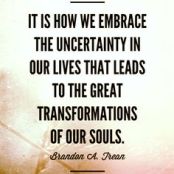
More Uncertain Times

I’ll let youncertaintyu in to a secret.  I know there’s something I’m supposed to write, but I almost never know what I’m writing about until the article comes out.

That seems weird.  I should know my writing content, but it seldom works that way.  I usually think I know where it’s going … But I’m usually surprised in some ways.

This has been a trying time for me for the last 3 weeks. During this period time I have become re-connected with my mortality.  The stroke took more from me than I am willing to admit.  And it gave some things to me too.

Since my stroke I’ve been struggling with linguistics and language.  I know the word I want to use… But I can’t remember how to say it.  I’ve become facile in finding an analog word.  It took me ten minutes to figure how to say “inoculation“.  I know the word. I understand the word.  I can even spell the word, but there is a part of my word processing brain isn’t working like it used to.  I have to learn again.

Bringing the word to my consciousness is moving slower than it used to.  I was trying to give an example two days ago and struggled to bring the cognitive thoughts so I could create the example.  I know the idea, but the words wouldn’t come.  I couldn’t remember how to verbalize my ideas.  Very frustrating.

Before my stroke I’d never stuttered or stammered.  Now I’ve found some new stammering and stuttering ability.  As a guy who was one of the top of the top professional speakers, this is new territory.  It is scary.

As long as I can remember, I’ve been one of the quickest, smartest guys in the room.  I’ve been in the top 3-4% of ability to cognate, think, verbalize, and communicate.  It was a gift that was natural; it was easy for me. I got a 3.98 GPA in under-grad school (I made a B+ once); I made all A’s in grad and post-grad work.  I was the classic over-achiever/nerd.

My humor is still good, but I can’t get the joke out with any effective timing.  Trying to joke reminds me of the classic horrible joke tellers I knew… Now I am one.

My decline of my abilities has taken a toll on my confidence.  Or it’s made me more human.  Or both.  I’m in new un-charted waters again.  The medico says there is nothing “permanent” damage.  They’ve said I’ll have to practice and learn and push it to get my linguistic abilities back.  It’s slow.

I was in a promotion process 20 days later after my stroke.  Some of my confidants advised me to “sit out” this round.  Some were encouraging.  I considered recusing myself.  I’m glad I went through the process.  And I learn some things.

Going through the process wasn’t pretty.  I stammered, searched for the right word, sounded too emphatic at the wrong time, and didn’t complete ideas I presented.  It seems like my ability to lucidly present an idea disappeared in a moment.  Poof!  Needless to say I was not selected… And rightfully so.

And like I said there were some gifts….

My docs have given up on my eating patterns. They didn’t suggest changing diet or losing weight.  They decided more medication was the best route (this isn’t the gift).  But my eyes are more wide open than ever.  On my decision I’ve radically changed my diet.  I have not had any refined sugar since getting out of the hospital.  This has NEVER happened to me.

My name is Jay and I’m a sugar-addict.  Recovering.  For me, my white powder drug of choice has always been sugar.  Yes, I might of killed a few people in the way, but the process of becoming sugar-free may be one of the greatest things I can do for myself.  I’ve been sugar-sober for 21 days.

According to the BMI (body mass index) I am considered overweight until my weight drops below 199 pounds.   When I just finished OTS (US Air Force Officer Training School) I was about 200 pounds at 27 years of age.  That was 60 pounds and almost 30 years ago.  At my fattest I was 320 pounds.  When I was admitted to the hospital I was about 260.  Now I’m 234 and dropping.  My goal is 199.  Yay, goals.

My title means life isn’t certain.  When I think I know about the “zig”–Life gives me a “zag”.  I do lived a blessed life…. And as I’ve read and said… “I’m Not in Charge“.

Of course, your mileage may vary

Dr Jay

I Am Blessed

stroke2

I know I’m one of the most blessed person in the world.  I just had a stroke…. a CVA…. I had a brain attack.

And I lived to tell the story.

I got up for work with the regular normal routine.  I was up at 0430 hours and knew I needed coffee.  Something didn’t see just right…. I couldn’t have great focus while I was trying to read the news… I couldn’t see things clearly…..I probably just needed more caffeine.  I had the normal toast and coffee.  I showered and dressed to get to briefing.

I made a little chit-chat with the other patrol members as I was getting dressed for work.  Something wasn’t right. I couldn’t put my finger on it.

I attended briefing and gave the correct amount of attention to the leader of briefing.  I heard a senior Sergeant drone on about the tax scams and fraud modus operandi and the local thieves perpetrating the criminality d’jour.  I heard all the words. I knew he was speaking English. But, however, something wasn’t right.  I was confused.

I heard another patrol officer telling a military story with passion and details that should have mean something to me (as a veteran)…. but there was no context that mean something to me. I was confused.

Fortunately my Sergeant noted something wasn’t right with me.   I told him “I’m OK I’m gonna just sat down for a minute”.  He’s a trained observer… fortunately. And he act.

Sarge directed a patrol partner to shepherded me into the police vehicle and whisk me to the emergency department.  And then the medicos took over.

There was a mish-mash of CT scans, MRI, X-Rays, lab reports…. And a few days in the hospital stay.  And the diagnosis was certain.  I had a stroke.  It was not a “mini” stroke.  It was a full-blown stroke.  I was blessed, because my stroke was a mild stroke.

My language is a little mixed up. My speech is slightly affected. My vision came back to normal.  But I can walk and think and take care of myself.  I was blessed.  The stroke started at about 4:30am and I was in the emergency room at about 7:20am.  I was blessed.

Blessed is a point of view.  Some of my friends think it’s wrong to say I had a stroke and to think I’m blessed. But I think being blessed is the right emotion.  I am so grateful that my damage was not permanent damage.  A few months of therapy– some miracle medicine– and back to my life.  Blessed.

I would not give myself  a stroke if it my choice…. But sometime the trajectory of life changes thing…. And the universe has different plans…. And I know I’m not in charge.   So I choose feeling blessed and a great sense of gratefulness…. So I’m waiting the next chapter…

Of course, you mileage may vary.

Dr Jay


Why They Don’t Listen


I think everybody wants to be ‘heard’.  I know I do.  I know I want my message to get across in a way to impact so my audience is more willing to take action.

I literally think there are benefits to others when they listen to my message.  Of course I could be delusional.

I believe there are benefits when bosses listen to workers… I want my bosses to believe they’ll miss something if they don’t pay attention to my messages.  I want to create enough value and credibility (by my words and actions) that I have to be heard.

Yet sometimes I know I’m not heard…. and usually it’s not because of them!  It’s me. Here are some reasons ‘Why They Don’t Listen’ … and some fixes:

  1. Too much negativity.  Nobody listens to a whiner.  If I want my message to be heard, I have to have a positive approach. I have to be solution-centric.   If I’m complaining; they’re tuning me out.  The FIX–Stop sniveling. Focus on solutions.
  2. All hat and no cowboy.  If you’re not genuine you’ll never develop a loyal audience.  If you are too fake or phony, it’s easy to be seen as exactly what you are.  Empty promises and words that don’t ring true will shut their ears every time.  The FIX–Be real.
  3. You’ve been dishonest with them.  If they ever catch you lying they’ve confirmed one thing–You’re a liar.  The question they keep asking is ‘To what frequency does this lying occur?’  Too much hyperbole can wear your credibility down and make you lose your audience.  The FIX–Speak the truth.
  4. You don’t really care.  Or your message isn’t tailored to their needs.  If you’re only presenting your needs and your point of view they’ll tune you out.  They are listening to the most popular radio station in the world WII-FM (what’s in it for me).  The FIX–Make it about more than yourself.
  5. Using 10 words when 5 will do.  If you talk too much you’ll lose them quickly. Listening is more powerful than talking.  Sometimes less is really more.  I’d rather leave them wanting to talk to me again than them wishing they could get rid of me.  The FIX–Use the right words and quit talking.
  6. They’ve never felt heard.  If you don’t listen to them and validate them, it’s hard to get them to hear you.  We listen to people who validate us.  The FIX–Make them feel validated.

Here are some dead give-aways to recognize they aren’t listening:

  • Fidgeting, shuffling feet, distracted actions
  • Minimal/low eye contact
  • No real response when you go silent
  • Drooling/snoring

Here are some indicators they MAY be listening:

  • Forward lean
  • Lucid questions
  • Eye engagement
  • Appropriate response to ‘tie down’ questions

Real communication and listening is a full contact sport.  It takes energy, but I think it’s worth it….

Of course, Your mileage may vary.

Dr Jay


What’s Your Purpose?

I guess the question of “What’s Your Purpose?” came to my mind because I caught myself doing things out of habit instead of on purpose.  I know you can do just about anything you set your mind to if you have strong enough motivation… If you have a strong enough purpose….

With that in mind, I decided to cut back my refined sugar intake–My purpose in reducing my sugar consumption is to:

  • live longer
  • be healthier
  • control my diabetes better
  • drop a couple of inches from my waistline
  • improve my energy and
  • promote other health benefits I can’t even think of

But I sabotaged my purpose through an unhealthy habit.  This came to my conscious awareness just after I popped a piece of left-over Valentine’s chocolate into my mouth…. An unconscious behavior…. a habit… after a healthy meal!

For years I’ve publicly stated that my white powder drug of choice is sugar. My sugar habit is akin to a smoker lighting up…. I didn’t even think about what I was doing until the creamy chocolate truffle was melted in my mouth…. Geez what’s wrong with me?

Freud would say my purpose wasn’t properly internalized…. Therefore I didn’t behave in a way consistent with my stated desires…. My ID just beat my EGO and my SUPEREGO laughed in judgement.

Jung would say my Self was overcome by my shadow — Or the personal unconsciousness of the whole which encompasses the compensating values of the dark side or trickster archetype.

Erikson would simply question “Was it OK to have been you?” (In a German accent of course)

Ellis would reinforce that I never knew my truest beliefs about myself and was doomed to eat the chocolate until I adjusted my unknown beliefs.

Rogers may hypothesize that the apparent in-congruence of a fully functioning person is because of my lack of openness to the experience.

Skinner would remind me that my freewill to not eat sugar was just an illusion.

Or maybe I set myself up for failure?  I am the one who left the candy in my candy drawer.  And I have a CANDY DRAWER!

Perhaps I wasn’t honest with myself?  If I really intend to cut sugar out then why do I have a stash?  Hmmmmm…. Honest self-introspection isn’t always fun.  Dr Jay the behaviorist makes a diagnosis of Jay the sugar fiend.  Behavior betrays motivation…. Again.

But this isn’t just about candy.  It’s about everything in life.  Is my stated purpose aligned with how I’m living my life?  What is my stated purpose?  Am I setting myself up for success in that purpose? What is my vision? What are my real goals? How do my stated goals match up with my behaviors?

Are my organizational goals aligned with the behaviors at work?  We say we want compassion… Do we take the time to show it to our citizens?   We say we want community policing… Do we make the effort to engage them in our responses?  So much room for growth!

Perhaps this isn’t you. Maybe you, your purpose, your goals are congruent and aligned.  I hope so!  But I’ve got work to do….

And of course,  Your mileage may vary!

Dr Jay


Cult or Culture?

Comicculture

For the past couple of weeks I’ve been privileged to attend a leadership training developed and sponsored by my department.  I’m a street cop in a city of about 100,000 people.  Our department has about has over 200 staff members (including volunteers).     I’m a tiny part of my outfit.

The class had just over 20 attendees ranging from a police commander to a secretary.  A majority of the members were sworn officers who work patrol.

The class was developed and delivered primarily by our Lieutenants.  Our command staff was present and involved.  I can honestly report this was one of the best leadership classes I’ve attended.  The material was relevant and real.  There was a great mix of discussion and discourse. There was an academic freedom that was encouraging.  And probably most telling: There was ‘buy in’ from the leadership and participants.

When I returned to patrol and reported my synopsis to my fellow patrol mates they accused me of “drinking the Kool-Aid”.  Which got me thinking….

Was I part of the cult? Or was I helping create the culture?

 In my mind there is a great difference between cult and culture.  Cult connotes a religious fervor gone off the rails.  Culture bring images of refined tastes.  Frankly, I’ve very seldom been accused of having refined tastes….. But I digress….

In defining organizational culture we look at a very large set of value assessments held in common by the people in that organization.  Buying into a culture doesn’t require perfect conformity.  Not every member has the exact same value assessments as each other, but people belong to a similar culture if they have “buy in” and “tolerance” for the deviations among the group.

Fact is, this tolerance and variance is a basic difference between cult and culture.  A cult requires control.  Generally there are four areas of control that scream “CULT”.  They are:

  1. Behavior Control. Individualism is discouraged. Group-think prevails.  The individual must be obedient and not deviate from the accepted rituals.
  2. Information Control.  There is a strict “need to know” mentality.  Access is limited.  There is no transparency.
  3. Thought Control.  The cult doctrine cannot be questioned. Dissent is discouraged.  There is only one truth.
  4. Emotional Control.  Fear is the overriding emotion.  Create a phobia about questions or leaving the group.

In our leadership course almost the exact opposite was encouraged.  Our teaching staff laid out some ideas for developing and refining our culture.  They suggested our organizational culture is about:

  • Positive empowerment and leadership
  • Taking calculated risks with room for mistakes
  • “Failing forward”
  • Creative and positive internal and external customer service
  • Personal and organizational growth, development, learning
  • Question the status quo
  • Compassion and collaboration

Here’s a comparison of cult and culture. (Courtesy of Prepare International)

CULT
1. Emerges quickly with a forceful leader
2. Based on the personality of the leader
3. Fragile and volatile due to the leader
4. Future lasts as long as the leader does
5. Survival rests on a personality
6. People are controlled from the top
7. Leader pushes values on others
8. Works through compliance
9. Centralization (positional power)
10. Can breed fear and insecurity
11. Low risk, low reward
12. The leader leads followers
13. Short term/fleeting success
 Versus
 CULTURE
1. Emerges slowly in time with a leadership team
2. Based on the shared values and goals of people
3. Durable and robust due to the environment
4. Future lasts as all transmit to next generation
5. Survival rests on shared belief & experience
6. People are empowered from the top
7. Leaders model and teach competence and passion
8. Works through commitment
9. Decentralization (personal power)
10. Will breed love and respect
11. High risk, high reward
12. The leader creates leaders
13. Long term success
So whether I ‘drank the Kool-Aid’ or not is up for interpretation…..
And of course, your mileage may vary.